
IDEC Meaning in Text: The Essential Guide

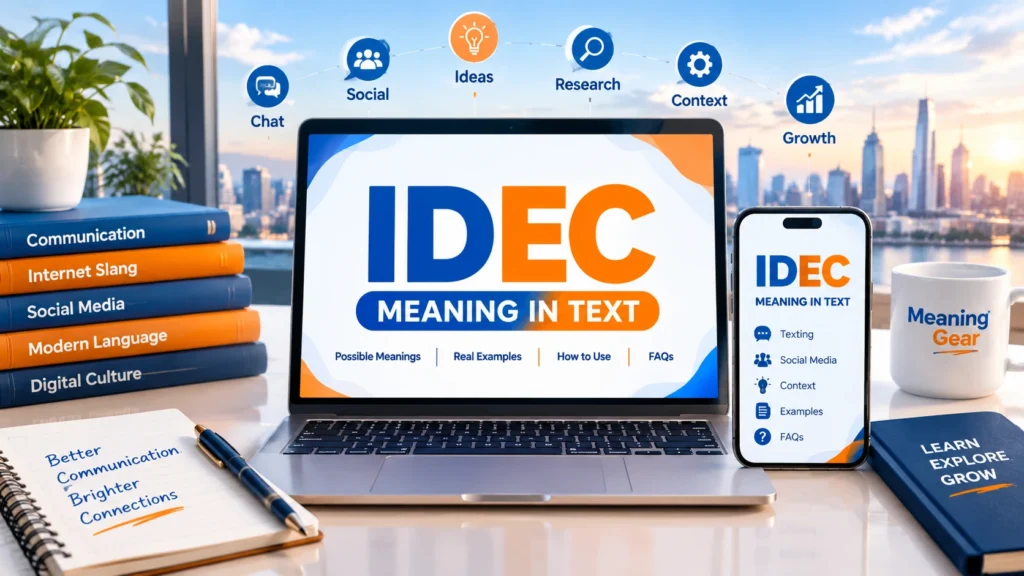
The IDEC meaning in text is usually understood as “I Don’t Even Care” in casual texting and online conversations. People use this abbreviation to express indifference, frustration, or a feeling that something is no longer worth their attention.
You may see IDEC in text messages, Snapchat chats, Instagram comments, TikTok discussions, and other social media conversations. Its exact tone depends on the situation, because it can sound relaxed, annoyed, or dismissive.
For example, if someone keeps arguing about a small issue, you might reply, “IDEC anymore 😂” to show that you do not want to continue the discussion.
What Does IDEC Mean in Texting?
In texting, IDEC stands for “I Don’t Even Care.” It is an informal abbreviation that allows people to express their feelings quickly without typing the entire phrase.
The expression often appears when someone feels tired of an argument, does not want to worry about a situation, or has decided to stop giving something attention. Although it can communicate genuine indifference, it may also be used sarcastically between friends.
Here are two simple examples:
- Friend 1: “They said you weren’t invited.”
- Friend 2: “IDEC, I wasn’t going anyway.”
Another example:
- Friend 1: “He’s still talking about what happened yesterday.”
- Friend 2: “IDEC anymore 😭”
In both examples, the abbreviation shows that the person does not want to spend more energy on the situation.
IDEC Meaning in Text: Quick Reference Table
The following table explains how IDEC is commonly used in digital conversations.
| Texting Term | Meaning | Common Use |
|---|---|---|
| IDEC | I Don’t Even Care | Showing indifference |
| IDC | I Don’t Care | Expressing a lack of concern |
| IDK | I Don’t Know | Showing uncertainty |
| IDGAF | I Don’t Give a F*** | Expressing strong indifference, often with profanity |
| IMO | In My Opinion | Sharing a personal viewpoint |
| NVM | Never Mind | Dropping a subject or changing one’s mind |
Remember: IDEC and IDC are similar, but IDEC adds extra emphasis. Depending on the conversation, it can sound more frustrated or emotionally dismissive than a simple “I don’t care.”
How Is IDEC Used in Everyday Conversations?
People use this abbreviation in several situations, especially when chatting with friends or responding to online discussions. The meaning becomes clearer when you look at the context and the words around it.
1. When someone is annoyed: A person might use IDEC after repeatedly discussing the same problem. For example, “IDEC, do whatever you want” can suggest frustration rather than genuine calmness.
2. When someone wants to move on: If a disagreement no longer matters to them, they may text, “Honestly, IDEC anymore.” This signals that they are ready to stop discussing the issue.
3. When joking with friends: In a playful conversation, IDEC can be less serious. Someone might say, “IDEC who wins, I’m just here for the snacks 😂” while watching a game.
4. When responding to gossip: If a friend shares unnecessary drama, a reply such as “IDEC about their business” communicates that the person does not want to get involved.
I’ve noticed that short expressions like this can feel much harsher in a text than they would in a face-to-face conversation. A laughing emoji or a friendly relationship can soften the message, while a blunt reply during an argument may come across as rude.
Real-Life Texting Examples of IDEC
These sample conversations show how the abbreviation can sound different depending on the situation.
Example 1: A conversation between friends
Mia: “Apparently, she was talking about you again.”
Alex: “IDEC tbh, I’m tired of the drama.”
Here, IDEC expresses frustration and a desire to avoid unnecessary gossip.
Example 2: Making weekend plans
Sam: “Do you wanna go to the beach or the mall?”
Jake: “IDEC lol, you pick.”
In this case, the speaker is relaxed and lets the other person decide. The abbreviation does not necessarily indicate anger.
Example 3: An argument over text
Lily: “You never listen when I explain things.”
Noah: “IDEC anymore.”
This response sounds dismissive and may hurt the other person’s feelings. In a serious conversation, the same abbreviation can communicate emotional distance rather than casual indifference.
IDEC vs. IDC: What’s the Difference?
Both abbreviations express a lack of concern, but they can carry slightly different levels of emphasis.
| Feature | IDEC | IDC |
|---|---|---|
| Full form | I Don’t Even Care | I Don’t Care |
| Tone | Often more emphatic | Usually more direct |
| Common use | Frustration or strong indifference | General lack of concern |
| Example | “IDEC what they think.” | “IDC what they think.” |
Neither expression has a fixed emotional meaning. A message like “IDC 😂” may be playful, while “IDEC anymore” during an argument may sound more serious.
If you want to avoid misunderstandings, consider adding context or using a softer phrase such as “It’s okay, don’t worry about it.”
How to Reply When Someone Texts IDEC
Your response should depend on the person’s tone and your relationship with them. You do not need to assume they are angry simply because they used the abbreviation.
Here are a few natural replies:
- If they sound frustrated: “Okay, we can talk about it later.”
- If they are joking: “Lmao fair enough 😂”
- If they seem upset with you: “Did I do something to upset you?”
- If they want to end the discussion: “No worries, let’s leave it there.”
- If they are being dismissive: “I understand, but I’d still like to finish what I was saying.”
If the conversation involves a sensitive topic, responding calmly is usually better than sending another dismissive abbreviation. A short message can easily be misunderstood when neither person can hear the other’s tone of voice.
Read MORE: Bet Meaning in Text: The Easy Guide to Slang
Frequently Asked Questions About IDEC Meaning in Text
1. What does IDEC stand for in texting?
IDEC usually stands for “I Don’t Even Care.” It is an informal texting abbreviation used to express indifference, frustration, or a lack of interest in a situation.
2. Is IDEC rude?
IDEC can sound rude or dismissive, especially during an argument or serious conversation. Among close friends, however, it may be used casually or jokingly without any intention to offend.
3. What is the difference between IDEC and IDC?
IDEC means “I Don’t Even Care,” while IDC means “I Don’t Care.” Both express indifference, but IDEC can add emphasis depending on the context.
4. What does IDEC mean on Snapchat?
On Snapchat, IDEC generally has the same meaning: “I Don’t Even Care.” People may use it in snaps, private messages, or replies to express that they are not concerned about something.
5. Can I use IDEC in professional messages?
It is best to avoid IDEC in professional emails and workplace messages because it can sound dismissive. Instead, use phrases such as “I don’t have a strong preference” or “I’m comfortable with either option.”
Final Thoughts on IDEC Meaning in Text
Understanding the IDEC meaning in text helps you interpret casual messages, social media replies, and everyday conversations more accurately. The abbreviation usually means “I Don’t Even Care,” but its tone can range from playful indifference to genuine frustration.
Pay attention to the conversation, the relationship between the people involved, and any emojis or surrounding words before deciding what someone means. When used appropriately, IDEC is a quick way to express a lack of concern, but in sensitive conversations, clearer wording can help prevent misunderstandings.

[…] Read More: IDEC Meaning in Text: The Essential Guide […]