YW Mean After Thank You: What Does YW Mean?

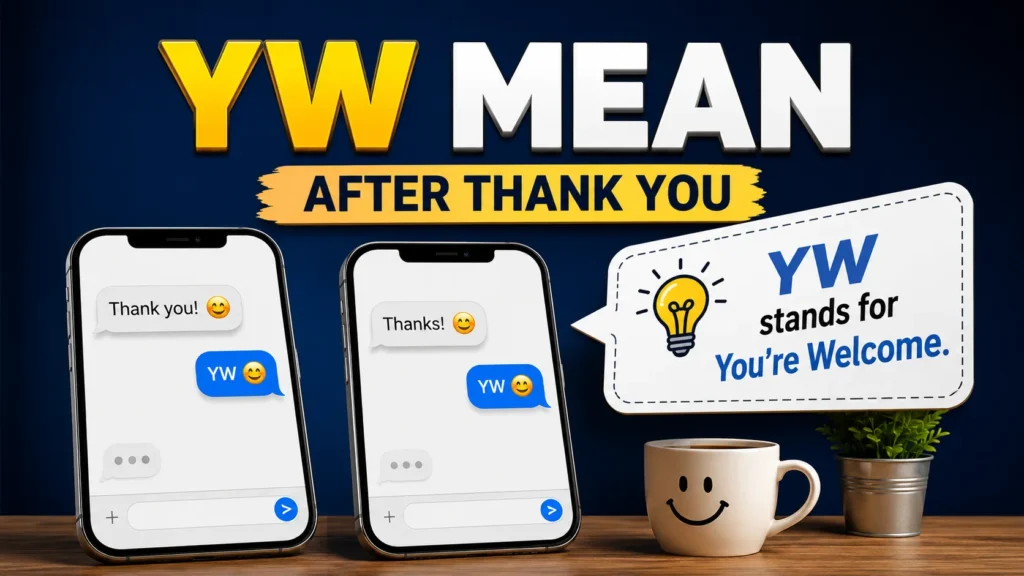
If someone replies “YW” after you say “thank you,” they are usually giving you a quick, casual way to say “You’re welcome.”
This abbreviation is common in texting, social media messages, gaming chats, and everyday online conversations. It saves time while still showing that the person acknowledges your thanks.
Understanding YW mean after thank you can also help you read the tone correctly. Depending on the conversation, “YW” can sound friendly, casual, polite, or simply quick and practical.
YW Mean After Thank You – Quick Meaning
YW means “You’re welcome” after someone says “thank you.”
For example:
- Person A: “Thanks for helping me!”
- Person B: “YW!”
Here, YW = You’re welcome.
It can also appear in slightly different forms:
- “yw” — casual and common
- “YW!” — more energetic or friendly
- “yw :)” — warm and affectionate
- “yw lol” — playful or relaxed
- “you’re welcome” — more formal or deliberate
The meaning is generally the same, but the punctuation and surrounding words can change the tone.
Why Do People Say YW After Thank You?
People use YW because texting encourages short, efficient communication. Instead of typing the complete phrase “you’re welcome,” someone can type two letters and keep the conversation moving.
It is especially natural when the favor or interaction is small.
For example, if someone says:
“Thanks for sending the link.”
A simple:
“yw”
feels perfectly normal in a casual chat.
The abbreviation can also prevent a conversation from becoming unnecessarily formal.
Origin & Background of YW Mean
YW developed as part of the broader culture of internet abbreviations and texting shorthand. Similar expressions became popular as people began communicating through SMS, instant messaging, online forums, and social media.
The abbreviation comes directly from the first letters of “you’re welcome.”
Texting culture made abbreviations such as TY, TYSM, NP, LOL, BRB, and YW common because users wanted to communicate quickly without typing complete phrases.
Over time, these expressions moved beyond traditional text messages and became normal across platforms such as Instagram, Snapchat, TikTok, Discord, and other messaging communities.
YW Mean in Real-Life Conversations
WhatsApp Conversation
Person A: Thanks for picking that up for me!
Person B: Yw! No problem.
The addition of “No problem” makes the response feel warmer than simply writing “yw.”
Instagram DM
Person A: Thank you for sending me the photos!
Person B: yw 😊
The lowercase abbreviation and emoji create a relaxed, friendly tone.
TikTok Comments
Person A: Thanks for explaining this!
Person B: YW 😂
Here, “YW” may be paired with an emoji to make the interaction feel playful.
Text Message
Person A: Thanks for reminding me about the appointment.
Person B: yw, I knew you’d forget 😭
In this example, “yw” is friendly and humorous rather than formal.
Emotional & Psychological Meaning of YW
Although YW literally means “you’re welcome,” the emotional meaning depends heavily on context.
A lowercase “yw” may feel casual and effortless. It does not necessarily mean the person is uninterested.
A response such as “YW!!” can feel more enthusiastic. Adding an emoji can make the message appear warmer.
There is also a psychological reason short responses work well in digital conversations: they reduce social pressure. A person can acknowledge gratitude without turning a tiny interaction into a formal exchange.
Imagine thanking a friend for holding the door open. Saying “You’re welcome” is perfectly natural in person. In a text conversation, “yw” serves the same purpose with less effort.
YW Usage in Different Contexts
Social Media
YW is extremely natural on social media, particularly when someone thanks you in a comment or direct message.
Example:
“Thanks for sharing this!”
“YW!”
The expression feels casual and internet-friendly.
Friends and Relationships
Friends often use yw because their conversations do not require formal language.
Example:
“Thanks for covering for me 😂”
“yw, you owe me one.”
Here, the abbreviation helps maintain a relaxed relationship.
Work and Professional Settings
YW can be acceptable in informal workplace messaging, particularly when communicating with coworkers who regularly use casual language.
Still, “You’re welcome” or “No problem” may be safer when speaking with a manager, client, customer, or someone you do not know well.
Casual vs. Serious Tone
“YW” generally creates a casual tone.
If the conversation is emotionally serious, professional, or highly respectful, writing the full phrase may feel more appropriate.
When Not to Use YW
There are situations where YW may not be the best choice.
Avoid it when communicating with someone who expects formal or professional language. A business email, official letter, customer-service response, or formal academic setting usually benefits from complete words.
Cultural expectations also matter. Some people may understand texting abbreviations immediately, while others may find them confusing or overly informal.
If you are uncertain about the relationship, “You’re welcome” is the safer option.
Common Misunderstandings About YW
“YW” Is Not Rude by Itself
Some people interpret a short “yw” as cold or dismissive. That interpretation is not always accurate.
Many people simply use lowercase abbreviations because that is their normal texting style.
Capitalization Does Not Change the Basic Meaning
“YW,” “yw,” and “Yw” all generally mean “You’re welcome.”
The difference is mostly stylistic.
It Does Not Always Show Strong Emotion
Someone saying “yw” is usually acknowledging your gratitude, not necessarily expressing excitement or affection.
The surrounding conversation provides the emotional context.
It Can Be Friendly Without Being Romantic
If someone sends “yw ❤️”, the heart may add warmth, but “yw” itself does not automatically have a romantic meaning.
YW Mean vs. Similar Expressions
| Expression | Meaning | Typical Tone |
|---|---|---|
| YW | You’re welcome | Casual |
| You’re welcome | You’re welcome | Neutral/polite |
| YW! | You’re welcome | Friendly/enthusiastic |
| NP | No problem | Casual |
| No worries | It was not a problem | Relaxed |
| My pleasure | I was happy to help | Polite/warm |
| Anytime | Happy to help again | Friendly |
| Of course | Glad to help | Warm/confident |
| Sure | Happy to do it | Very casual |
Key Insight
YW is one of the simplest ways to acknowledge “thank you.” Its exact tone comes from the relationship, punctuation, emojis, and surrounding conversation.
Variations and Types of YW
1. yw
The lowercase version is highly casual and common in everyday texting.
2. YW
Capital letters make the abbreviation slightly more noticeable while keeping the same meaning.
3. YW!
The exclamation mark can make the response sound more enthusiastic.
4. yw 🙂
The smiley adds friendliness and warmth.
5. yw lol
This version gives the conversation a playful or humorous feeling.
6. yw haha
It suggests a relaxed interaction, especially between friends.
7. YW ❤️
An emoji can add affection, appreciation, or emotional warmth depending on the relationship.
8. yw, no problem
This combines the abbreviation with reassurance.
9. yw anytime
It communicates that the person would be willing to help again.
10. yw! glad I could help
This is warmer and more expressive than a simple “yw.”
How to Respond When Someone Uses YW
You normally do not need to respond to “YW” because it already closes the thank-you exchange.
If you want to continue the conversation, your reply can match the tone.
Casual Replies
- “😊”
- “Of course!”
- “Appreciate it!”
- “Thanks again!”
Funny Replies
- “You’re welcome 😂”
- “I’ll remember this favor.”
- “Haha, anytime!”
Mature Replies
- “I really appreciate your help.”
- “Thanks again, seriously.”
- “That means a lot.”
Respectful Replies
- “Thank you again.”
- “I appreciate it.”
- “That was very kind of you.”
Regional & Cultural Usage
Western Culture
In the United States, Canada, the UK, Australia, and similar English-speaking environments, YW is generally understood as a casual form of “you’re welcome.”
You will often see it in texts, social media comments, and private messages.
Asian Culture
English texting abbreviations are widely used by younger internet users across many Asian countries.
However, formal communication may still favor complete expressions such as “You’re welcome” or “My pleasure.”
Middle Eastern Culture
English abbreviations can appear frequently in online conversations, particularly among younger users who communicate across international social platforms.
The appropriate choice depends on the relationship and level of formality.
Global Internet Usage
Because English has become a major language of online communication, YW is recognizable far beyond traditional English-speaking countries.
Younger users are particularly likely to understand it.
Gen Z vs. Millennials
Gen Z may use yw, emojis, shortened spellings, and other abbreviations very naturally.
Millennials also understand YW, although individual texting habits vary considerably.
Older generations may prefer the complete phrase, especially in professional conversations.
Is YW Safe for Kids?
YW is generally a harmless texting abbreviation meaning “you’re welcome.”
By itself, it does not contain offensive or inappropriate language.
Parents and educators should still consider the surrounding conversation because abbreviations can sometimes have multiple meanings in different online communities. Context is always important when interpreting internet slang.
FAQs About YW Mean After Thank You
What does YW mean after thank you?
YW means “You’re welcome” after someone says thank you. It is a casual texting abbreviation commonly used in messages and social media.
Is YW rude in texting?
No. YW is not inherently rude. It is normally a quick, casual way to acknowledge someone’s thanks.
What does lowercase yw mean?
Lowercase “yw” usually means the same thing as uppercase “YW.” The lowercase style simply feels more relaxed and informal.
What does YW mean from a girl?
If a girl replies “YW” after you thank her, it normally means “You’re welcome.” The abbreviation alone does not indicate romantic interest.
What does YW mean from a guy?
A guy using “YW” is generally just saying “You’re welcome.” Its meaning should not be interpreted as romantic without additional context.
Is YW the same as no problem?
They are similar but not identical. YW means “You’re welcome,” while “no problem” reassures the other person that helping was not an inconvenience.
Should I use YW in professional messages?
It depends on the workplace culture. In formal communication, “You’re welcome” or “My pleasure” is usually more appropriate than “YW.”
Conclusion
When someone says “YW” after thank you, the meaning is simple: “You’re welcome.”
It is a short, casual expression that fits naturally into texting, social media, gaming chats, and conversations between friends.
The important part is not to overthink the abbreviation itself. A lowercase “yw” does not automatically mean someone is annoyed, distant, or uninterested. Their overall wording, punctuation, emojis, and relationship with you provide the real clues.
Once you understand the context, YW becomes one of the easiest texting abbreviations to recognize and use confidently.