BB Mean in Text: Meaning, Uses & Real Chat Examples

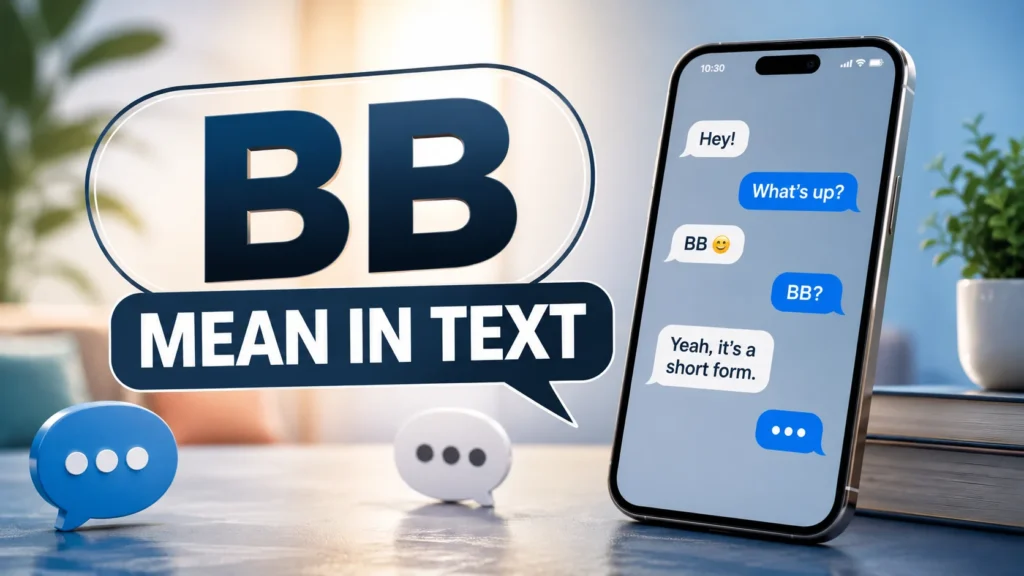
If you’ve ever received a message saying “BB” and wondered what it meant, you’re not alone. Text messaging has created a language of its own, filled with abbreviations that can mean different things depending on the conversation. Among these, BB is one of the most commonly used yet easily misunderstood.
Some people use BB as a sweet nickname for someone they care about, while others use it simply as a shorter way of typing “baby,” “babe,” or even “bye-bye.” The meaning often depends on who sent the message, where you’re chatting, and the tone of the conversation.
Understanding what BB means in text helps you avoid awkward misunderstandings and respond naturally. In this guide, you’ll learn its meaning, history, emotional context, real-life examples, and the situations where using it is—or isn’t—a good idea.
BB Mean in Text – Quick Meaning
What Does BB Mean?
In most text messages, BB stands for “baby” or “babe.” It’s an affectionate nickname people use for someone they love or feel close to.
It can also mean “bye-bye” in casual conversations, especially when ending a chat.
Common meanings include:
- Baby
- Babe
- Bye-bye
- Best buddy (less common)
- Beautiful (rare, depending on context)
The correct meaning depends on the conversation.
Quick Examples
“Good morning, BB! Hope you sleep well.”
“Miss you already, BB ❤️”
“I’m heading out now. BB!”
In the first two examples, BB means baby or babe. In the last one, it means bye-bye.
Origin & Background
Where Did BB Come From?
The abbreviation BB became popular during the early days of mobile texting when character limits and small phone keyboards encouraged people to shorten words.
Instead of typing baby or babe, users simply typed BB. It saved time and quickly became part of everyday digital communication.
Influence of Online Culture
As texting evolved into instant messaging, BB spread across platforms like:
- SMS
- MSN Messenger
- Facebook Messenger
- Snapchat
Over time, it became a warm, affectionate expression used between romantic partners, close friends, and even family members.
Social Media Impact
Social media helped make BB even more popular.
Today you’ll often see comments like:
- “Looking amazing, BB!”
- “Miss you, BB.”
- “Happy birthday, BB!”
Influencers, celebrities, and creators frequently use it because it feels friendly and personal.
How Its Meaning Evolved
Originally, BB mostly meant baby.
Today, its meaning changes based on context:
- Romantic nickname
- Friendly nickname
- Casual farewell
- Cute online expression
Modern communication relies heavily on context, making BB flexible and easy to use.
Real-Life Conversations
WhatsApp Conversation
Person A:
Hey BB, did you get home safely?
Person B:
Yep! Just got in. Thanks for checking on me ❤️
Instagram DM
Person A:
BB, your vacation pictures are incredible!
Person B:
Aww thank you! That means a lot.
TikTok Comments
Person A:
You’re glowing, BB!
Person B:
You’re too sweet 😂❤️
Text Messages
Person A:
Good luck on your interview today, BB!
Person B:
Thank you! I’ll text you afterward.
These examples show that BB often communicates warmth, closeness, and emotional support.
Emotional & Psychological Meaning
What Emotion Does BB Express?
Unlike many internet abbreviations, BB carries emotion.
Depending on the relationship, it may express:
- Affection
- Love
- Care
- Comfort
- Support
- Friendship
- Playfulness
A simple two-letter message can make conversations feel more personal.
Why Do People Use It?
People naturally shorten language when communicating online.
Using BB helps messages feel:
- Faster
- More intimate
- Less formal
- More conversational
It also creates a sense of belonging between people who share a close relationship.
What It Reveals About Modern Communication
Modern texting isn’t just about exchanging information.
It’s about expressing emotion efficiently.
Short expressions like BB replace longer phrases while still conveying warmth.
Instead of saying:
“You’re important to me.”
Someone might simply write:
“Goodnight BB ❤️”
The emotional meaning is understood without many words.
A Personal-Style Scenario
Imagine you’ve had a stressful day at work.
You’re exhausted and not in the mood to talk.
Then your partner texts:
“Hope everything gets better, BB.”
It’s only a few words, but they instantly make you feel cared for. That’s why affectionate abbreviations continue to thrive—they create emotional connection with minimal effort.
Usage in Different Contexts
Social Media
On Instagram, TikTok, Snapchat, and Facebook, BB is commonly used in comments and direct messages.
Examples:
- Love you, BB!
- Looking beautiful, BB.
- Proud of you, BB.
It creates a friendly and approachable tone.
Friends & Relationships
Among close friends, BB can simply be playful.
Examples:
- Thanks, BB.
- You’re the best, BB.
In romantic relationships, it usually replaces words like:
- Baby
- Babe
- Darling
Work and Professional Settings
Using BB at work is generally not recommended.
Professional conversations should remain respectful and clear.
Instead of:
“Thanks BB!”
Use:
“Thank you!”
or
“Thanks so much!”
Unless you know someone extremely well outside work, avoid affectionate nicknames in professional communication.
Casual vs Serious Tone
In casual conversations, BB sounds warm and friendly.
In serious discussions—especially involving business, legal matters, healthcare, or customer service—it can seem inappropriate or unprofessional.
Choosing the right tone helps prevent misunderstandings.
When NOT to Use It
Professional Communication
Avoid using BB in:
- Business emails
- Job interviews
- Workplace chats
- Academic communication
It may appear overly familiar or disrespectful.
With People You Don’t Know Well
Calling someone BB too early can make them uncomfortable.
Always consider your relationship before using affectionate nicknames.
During Serious Conversations
If discussing topics like:
- Financial issues
- Family emergencies
- Medical situations
- Conflicts
Using playful abbreviations may unintentionally reduce the seriousness of the conversation.
Cultural Sensitivity
Not every culture uses affectionate nicknames freely.
Some people may interpret BB as flirtatious, while others see it as completely harmless.
Understanding cultural expectations helps avoid confusion.
Common Misunderstandings
Even though BB is widely used, people often interpret it differently. Understanding these differences can help you avoid awkward conversations.
BB Always Means “Baby”
This is the biggest misconception.
While BB most commonly means baby or babe, it doesn’t always carry a romantic meaning. Close friends, siblings, and even parents sometimes use it as a term of affection.
For example:
“Happy birthday, BB! Hope you have an amazing day.”
Here, BB simply expresses warmth and care.
BB Means Bye-Bye Every Time
Some people assume BB is always short for bye-bye.
That’s only true when it appears at the end of a conversation.
For example:
“I’m going to sleep now. BB!”
In this case, it clearly means “bye-bye.”
It’s Only Used by Teenagers
Although Gen Z helped popularize internet slang, BB isn’t limited to younger users.
Millennials, parents, and even grandparents who text regularly may use it affectionately.
It Is Always Romantic
Not necessarily.
The relationship between the sender and receiver matters more than the abbreviation itself.
A friend saying,
“You got this, BB!”
has a completely different tone than a romantic partner saying,
“Miss you, BB ❤️”
Comparison Table
| Expression | Meaning | Typical Tone | Common Usage |
|---|---|---|---|
| BB | Baby, Babe, Bye-Bye | Affectionate or casual | Texts, DMs, social media |
| Babe | Romantic nickname | Loving | Couples |
| Baby | Affectionate nickname | Romantic or caring | Relationships |
| Bestie | Best friend | Friendly | Friends |
| Bro | Brother/Friend | Casual | Friends |
| BFF | Best Friends Forever | Friendly | Close friendships |
| Love | Affection | Warm | Family, partners, friends |
| GN | Good Night | Polite | Ending conversations |
| TTYL | Talk To You Later | Casual | Friends |
| Bye | Goodbye | Neutral | Any conversation |
Key Insight
BB stands out because it combines affection and simplicity. Unlike many abbreviations, its meaning changes naturally with the relationship and context, making it one of the most flexible expressions in modern texting.
Variations and Types
1. BB ❤️
Means “baby” with extra affection.
Usually used between romantic partners.
2. BBY
A popular abbreviation for “baby.”
Common on TikTok, Snapchat, and Instagram.
3. Babe
A full-word version that’s slightly more personal than BB.
4. Baby
The original expression from which BB evolved.
Often used in relationships.
5. BBG
Short for Baby Girl.
Usually expresses affection toward a girlfriend, daughter, or close friend.
6. BBB
Sometimes used playfully to emphasize affection.
Example:
“Miss you BBB!”
7. Hey BB
A casual greeting that immediately creates a warm tone.
8. Goodnight BB
Used before sleeping to show care and closeness.
9. Morning BB
A cheerful greeting often exchanged between partners.
10. Bye BB
A combination where BB still means “baby,” creating an affectionate farewell.
How to Respond When Someone Uses It
Casual Replies
- Hey, what’s up?
- Hi! How’s your day?
- Good to hear from you.
- Thanks, BB!
Funny Replies
- Only if snacks are included. 😂
- That’s my official nickname now?
- You’re making me smile already.
- Stop being so adorable!
Mature Replies
- I appreciate you checking in.
- Hope you’re doing well too.
- Thanks for thinking of me.
- That means a lot.
Respectful Replies
- Thank you!
- Wishing you a wonderful day.
- Take care.
- Likewise!
Regional & Cultural Usage
Western Culture
In North America, the UK, and Australia, BB is commonly used between partners and close friends.
It’s viewed as casual, affectionate, and friendly.
Asian Culture
Many young people in countries like South Korea, Japan, India, Pakistan, and the Philippines use BB because of global social media trends.
However, older generations may not recognize the abbreviation immediately.
Middle Eastern Culture
Usage varies.
Among younger internet users, BB is becoming more common, especially in English conversations. In more traditional settings, people may prefer full words or local expressions of affection.
Global Internet Usage
Across platforms like WhatsApp, Instagram, Snapchat, TikTok, Discord, and X, BB has become an international shorthand.
Even when users speak different native languages, many recognize it as an affectionate expression.
Generational Differences
Gen Z
- Uses BB frequently.
- Comfortable mixing emojis with abbreviations.
- Often combines it with internet slang.
Millennials
- Use BB mainly with partners and close friends.
- Prefer clearer wording in professional conversations.
Older generations generally recognize the meaning less often unless they regularly use messaging apps.
Is It Safe for Kids?
Yes, BB is generally safe for kids because it usually means baby, babe, or bye-bye.
However, context still matters.
If children see it online, parents can explain that it’s simply an affectionate nickname in most conversations. They should also teach children not to use affectionate terms with strangers online and to communicate safely on social media.
Read More: WYA Mean in Text: Meaning, Examples & Social Media Guide
FAQs
What does BB mean in text messages?
Most commonly, BB means baby or babe. In some conversations, it can also mean bye-bye.
Does BB always mean baby?
No. While “baby” is the most common meaning, context may indicate “babe,” “bye-bye,” or another affectionate nickname.
Is BB romantic?
Often, yes. However, many friends and family members also use it affectionately without romantic intent.
Can I use BB in professional messages?
It’s better not to. Professional communication should remain clear and formal unless you have a very close personal relationship with the recipient.
Is BB popular on social media?
Yes. You’ll regularly see it on WhatsApp, Instagram, Snapchat, TikTok, Facebook Messenger, and text messages.
What’s the difference between BB and Babe?
BB is simply a shortened version of babe or baby. The emotional meaning is usually the same.
How do I know what BB means in a message?
Look at the conversation and your relationship with the sender. If it’s used affectionately, it likely means baby or babe. If it’s used at the end of a chat, it may mean bye-bye.
Conclusion
Language constantly evolves, and BB is a great example of how just two letters can express warmth, affection, and connection. Whether it means baby, babe, or bye-bye, the intended meaning almost always becomes clear through the surrounding conversation.
The key to using BB confidently is understanding your audience and the context. Among close friends, family, and romantic partners, it can make conversations feel more personal and caring. In professional or formal situations, choosing complete words is usually the better option.
As digital communication continues to shape the way we connect, abbreviations like BB remind us that even the shortest messages can carry genuine emotion. Once you understand its different meanings and uses, you’ll recognize it instantly—and know exactly how to respond.