
IDC Meaning in Text: The Essential Guide to Its Use

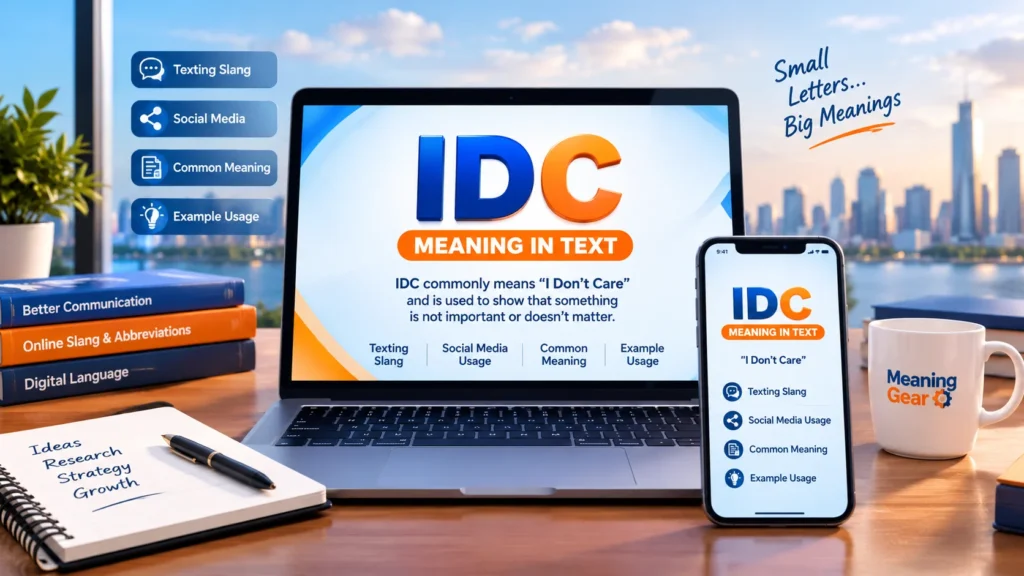
If you have seen IDC in a text message, Snapchat chat, Instagram DM, or TikTok comment, you might wonder what it means. The IDC meaning in text is “I Don’t Care.” People commonly use this abbreviation in casual online conversations to express indifference, show that something does not matter to them, or let someone else make a decision.
For example, if a friend asks, “Where should we eat tonight?” and you reply, “idc, you choose,” you are saying that you have no particular preference. However, depending on the conversation, IDC can sometimes sound dismissive, annoyed, or even rude.
What Does IDC Mean in Text Messages?
IDC stands for “I Don’t Care.” It is a popular texting abbreviation that saves time when people communicate through messages, social media, and online chats.
The meaning depends on the situation and the relationship between the people talking. Someone might use IDC because they genuinely have no preference, while another person might use it to show frustration or disinterest.
Here are two simple examples:
- Friend: “Do you want pizza or burgers?”
- You: “idc, anything is fine.”
Another example:
- Friend: “Are you upset about what they said?”
- You: “idc anymore.”
In the first conversation, IDC sounds relaxed and casual. In the second, it may suggest that the person is tired of discussing the issue or no longer wants to give it attention.
IDC Meaning in Text: Quick Reference Table
The following table explains how IDC is commonly used in different digital conversations.
| Texting Context | Example Message | Meaning |
|---|---|---|
| Casual texting | “idc what we watch” | I have no preference |
| Snapchat | “idc lol” | I do not care |
| Instagram comments | “idc what they think” | Their opinions do not matter to me |
| Friendship | “idc, you decide” | You can make the decision |
| Argument | “idc anymore” | I am no longer interested or emotionally invested |
| Group chat | “idc where we meet” | Any location is fine |
| Online discussion | “idc about the drama” | I do not want to get involved |
These examples show why context matters. The same three letters can communicate simple flexibility in one conversation and emotional distance in another.
How People Use IDC in Everyday Conversations
People use IDC for different reasons, and the surrounding words usually reveal their intention.
1. To show that something does not matter
When a person has no strong opinion about a decision, IDC can be a quick way to communicate that.
Example: “idc which movie we watch, just pick one.”
2. To express frustration
During an argument, someone might type IDC because they feel annoyed or want to stop discussing the subject.
Example: “Believe whatever you want, idc anymore.”
3. To avoid making a decision
Friends often use IDC when they are comfortable letting someone else choose a restaurant, activity, or meeting place.
Example: “idc where we go for lunch.”
4. To show independence
Sometimes, IDC means that someone is not worried about other people’s opinions or judgments.
Example: “They can talk all they want, idc.”
The tone can change significantly depending on punctuation, emojis, and the history between the people involved.
Real-Life Examples of IDC in Texting
Here are three realistic texting situations that show how the abbreviation works in everyday conversations.
Example 1: Making weekend plans
Mia: “Beach or shopping this Saturday?”
Jake: “idc tbh 😭 whichever is cheaper”
Mia: “Shopping it is then lol”
In this conversation, IDC means Jake is flexible about the plan. His follow-up gives a small clue about his actual preference: saving money matters more than the activity.
Example 2: Dealing with gossip
Ava: “Did you hear what they said about you?”
Sam: “yeah, idc what they think anymore”
Ava: “fair enough”
Here, IDC suggests that Sam does not want to give other people’s opinions any more attention. Depending on the situation, it may communicate confidence, exhaustion, or disappointment.
Example 3: A slightly tense conversation
Liam: “You never listen to me.”
Noah: “idc, do whatever u want”
Liam: “wow okay”
In this exchange, IDC sounds dismissive because it appears during a disagreement. The additional phrase makes the reply feel harsher than a simple statement of indifference.
Is IDC Rude or Disrespectful?
IDC is not always rude, but it can sound blunt because “I don’t care” may suggest that another person’s feelings or concerns are unimportant.
Among close friends, a message like “idc lol” might be completely normal. During a serious conversation, however, replying with “IDC” can make the other person feel ignored or dismissed.
Consider these differences:
- Friendly: “idc, you pick 😂”
- Neutral: “I don’t really mind either way.”
- Dismissive: “IDC. Stop asking me.”
- Reassuring: “I don’t care which option we choose; both are fine.”
If you want to avoid misunderstandings, use a more specific response when the conversation involves someone’s feelings, an important decision, or a sensitive topic.
IDC vs. IDK: What Is the Difference?
IDC and IDK look similar, but they communicate different ideas.
| Abbreviation | Full Form | Meaning | Example |
|---|---|---|---|
| IDC | I Don’t Care | Something does not matter to you | “IDC where we eat.” |
| IDK | I Don’t Know | You do not have the answer | “IDK where we should eat.” |
The difference is simple: IDC expresses indifference, while IDK expresses uncertainty.
For example, if someone asks whether you want coffee or tea, “IDC” means either option is fine. “IDK” means you have not decided or are unsure which one you want.
Other Expressions Similar to IDC
Several casual expressions can communicate an idea similar to IDC, although their tone may differ.
- IDGAF: “I Don’t Give a F***.” This is much stronger and often vulgar.
- Whatever: Can mean that you have no preference, but it may sound dismissive.
- I don’t mind: A softer, more polite way to express flexibility.
- It’s up to you: Shows that you are happy to let someone else decide.
- NVM: Short for “Never Mind,” usually used when someone wants to drop a subject or cancel a request.
Choosing the right expression depends on how strongly you want to communicate your feelings. For everyday conversations, “I don’t mind” is often safer than IDC when you want to sound friendly.
Read More: IGS Meaning in Text: The Ultimate Guide to Its Uses
Frequently Asked Questions About IDC Meaning in Text
1. What does IDC mean in texting?
IDC means “I Don’t Care.” People use it in text messages and online chats to express indifference, show that something does not matter, or let someone else make a decision.
2. What does IDC mean on Snapchat?
On Snapchat, IDC has the same common meaning: “I Don’t Care.” Someone might send it in a private chat, a group conversation, or a reply to a Snap. The tone depends on the surrounding message.
3. Does IDC mean someone is angry?
Not necessarily. IDC can express a lack of preference, but it may also indicate frustration or emotional distance. Read the complete message and consider the situation before assuming someone is angry.
4. What does IDC mean from a girl or a guy?
IDC generally means “I Don’t Care,” regardless of who sends it. It might be a casual response, a sign of annoyance, or a way to avoid choosing between options. The relationship and conversation provide more useful clues than the sender’s gender.
5. What is the difference between IDC and IDGAF?
IDC means “I Don’t Care,” while IDGAF means “I Don’t Give a F***.” IDGAF is more forceful and vulgar, so it can sound more aggressive or confrontational.
Final Thoughts on IDC Meaning in Text
Understanding the IDC meaning in text helps you interpret casual messages, social media comments, and online conversations more accurately. It usually stands for “I Don’t Care,” but its tone can range from relaxed and flexible to annoyed or dismissive.
Before responding to IDC, consider the conversation and the sender’s usual communication style. If you mean that either option is fine, adding a friendly phrase such as “you choose” can make your message sound more considerate and prevent unnecessary misunderstandings.

[…] Read More: IDC Meaning in Text: The Essential Guide to Its Use […]