IGH Mean in Text: Common Uses and Mistakes

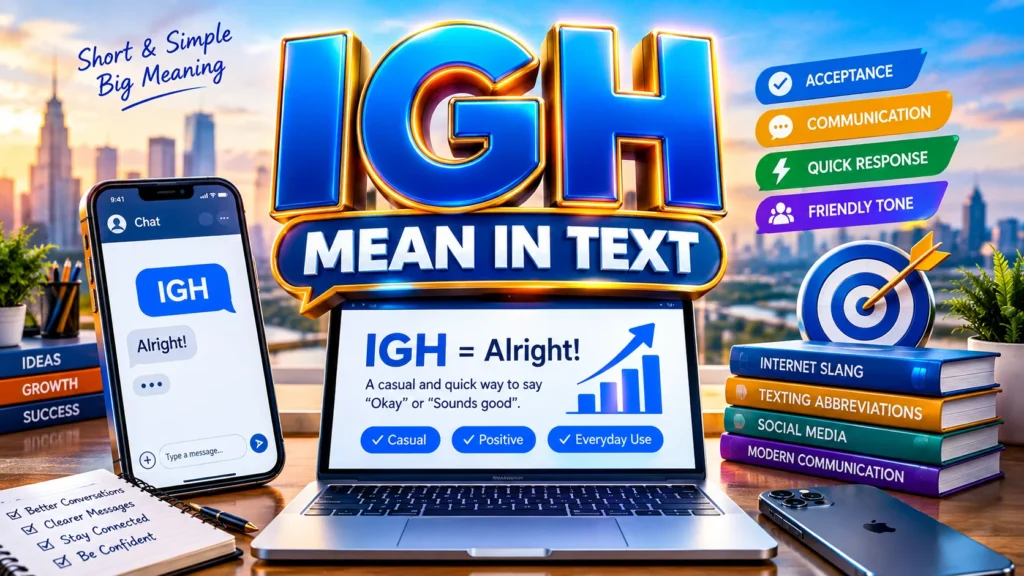
If you have seen IGH in a text, DM, Snapchat message, or social media comment, you may be wondering IGH mean in text and what it actually means. In casual online conversation, IGH usually means “alright” or “okay,” and it is often used as a quick way to agree, acknowledge something, or move a conversation forward.
The exact tone depends on the situation. A friendly “igh bet” can sound relaxed and accepting, while a short “igh” after an argument may feel more like “fine” or “whatever.” The surrounding message, punctuation, and relationship between the people can change how IGH comes across.
What Does IGH Mean in Text?
IGH means “alright” or “okay” in many texting and social-media conversations. It is generally a shortened, informal expression rather than a formal abbreviation.
For example:
- “I’ll call you later.” — “igh”
- “Igh, bet. See you there.”
It can be used when someone agrees with a suggestion, accepts what another person said, or simply wants to acknowledge a message without writing a longer response.
You may also see it written as “ighh,” “ight,” or “ight bet.” These variations can carry slightly different tones, but they generally belong to the same casual texting style.
Why Do People Say IGH Instead of “Okay”?
The appeal is mostly about speed and tone. Typing “igh” takes almost no effort, and among friends it can sound more natural than a complete “okay.”
I’ve noticed that short slang replies can sometimes say more about someone’s attitude than their literal meaning. For example, “okay” can sound neutral, while “igh” might feel more relaxed, dismissive, playful, or slightly annoyed depending on what came before it.
That makes the expression especially common in quick exchanges where neither person wants to turn a simple acknowledgment into a full sentence.
How IGH Changes Depending on the Conversation
The same three letters can land differently in different situations.
When a friend says, “We’re getting food at 8,” and you answer “igh,” you’re probably just confirming the plan. There is little emotional weight behind it.
After a disagreement, however, “igh” can sound colder. If someone says, “Do whatever you want,” and the reply is simply “igh,” it may communicate something closer to “fine” than enthusiastic agreement.
Here are a few common interpretations:
- Agreement: “Igh, I’ll come with you.”
- Acknowledgment: “Igh, got it.”
- Acceptance: “Igh, that works.”
- Mild annoyance: “Igh, fine.”
- Dismissiveness: “Igh, whatever.”
The surrounding conversation matters more than the abbreviation by itself.
IGH in Real Texting Conversations
A quick example between friends might look like this:
Maya: You still coming tonight?
Jay: yeah gimme like 20 mins
Maya: okay lol
Jay: igh bet
Here, “igh” is clearly casual and agreeable. Jay is essentially saying “alright, sounds good.”
Another conversation can have a different feeling:
Chris: You said you were gonna send it yesterday 😭
Sam: I knowww I forgot
Chris: can you send it tonight
Sam: igh fine
The addition of “fine” makes the response sound less enthusiastic. In this context, the expression can suggest reluctant acceptance.
A third example shows how it can appear in everyday planning:
Nia: We can meet at the mall around 5
Alex: igh that works
Nia: bet, see you then
Nothing dramatic is happening here. It simply keeps the conversation moving without sounding formal.
Common Mistakes When Using IGH
One of the easiest mistakes is assuming that IGH always sounds friendly. Because it is so short, a person who does not know the slang may interpret it as irritation or disinterest.
Tone can also change when punctuation is added. “Igh!” may feel energetic or playful in some conversations, whereas “igh.” can look noticeably colder.
It is also worth remembering that slang is highly personal. Some people use this expression regularly, while others may use “ight,” “okay,” “bet,” or “alright” instead.
For casual conversations, it is usually safest to use it when you already understand the other person’s texting style.
IGH vs. Ight, Alright, and Okay
Although these expressions can overlap, they are not identical in every situation.
| Expression | Common meaning | Typical tone | Example |
|---|---|---|---|
| IGH | Alright / okay | Very casual | “Igh, I’ll go.” |
| Ight | Alright / okay | Casual, slangy | “Ight, bet.” |
| Alright | Okay / agreed | Neutral to casual | “Alright, sounds good.” |
| Okay | Agreement / acknowledgment | Neutral | “Okay, I understand.” |
| Bet | Sure / definitely | Casual, confident | “Bet, I’ll be there.” |
“Igh” and “ight” are particularly close in casual texting, and people may use them interchangeably. The preferred spelling often comes down to personal habit and the online community someone is part of.
Is IGH Appropriate in Formal Messages?
Usually, no. IGH is best kept for informal communication, such as texting friends, chatting with people you know, gaming conversations, or casual social-media messages.
For work emails, school assignments, customer service messages, or professional communication, “okay,” “alright,” or a more specific response will usually be clearer.
For example, instead of writing “igh” to a manager, you could say, “Alright, I’ll take care of it.” That communicates the same basic acceptance without relying on slang.
Read More: SUH Mean in Text: Easy Guide to Its Real Meaning
Frequently Asked Questions About IGH
What does IGH mean in texting?
IGH commonly means “alright” or “okay” in casual texting. It can express agreement, acknowledgment, or acceptance depending on the conversation.
Is IGH the same as Ight?
They are very similar and can both mean “alright” in informal conversations. The spelling and preferred form vary from person to person.
Does IGH mean “fine”?
It can. In a conversation with an annoyed or reluctant tone, “igh” may be understood as “fine” or “whatever,” but context determines the intended meaning.
Can I use IGH in professional messages?
It is generally better to avoid it in professional communication. Use “okay,” “alright,” or a clearer phrase instead.
Final Takeaway
When you see IGH mean in text, the simplest interpretation is usually “alright” or “okay.” It is a short, informal response that can show agreement, acknowledgment, or acceptance.
Still, don’t judge the tone from the letters alone. A relaxed “igh bet” and a frustrated “igh.” may communicate very different attitudes, so the surrounding conversation is the best clue to what the sender actually means.