STSU Mean in Text: Meaning, Uses & Examples

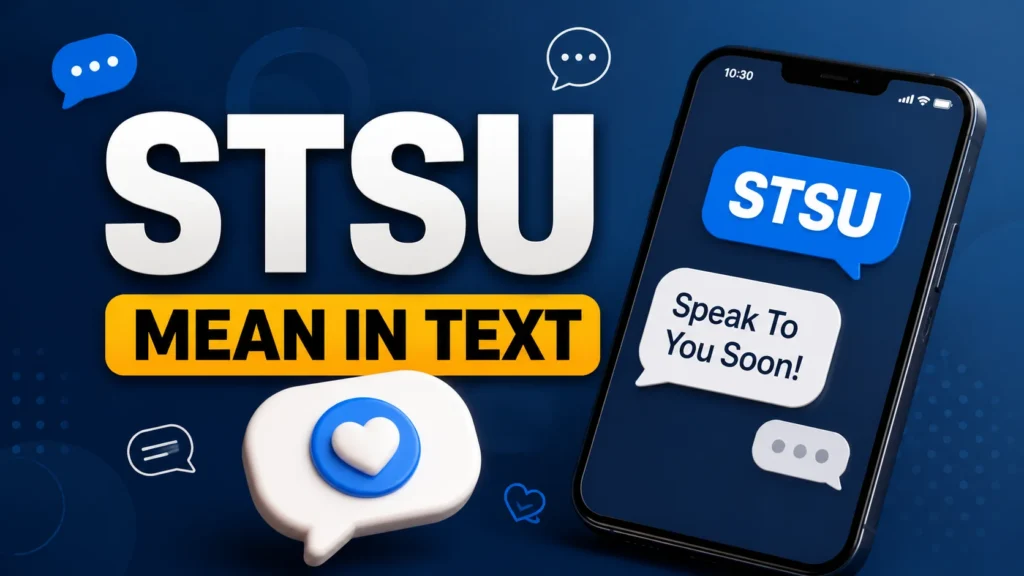
If you have searched for STSU mean in text, you probably saw these four letters in a message, comment, or social media conversation and wondered what they actually mean. STSU is not as universally established as texting abbreviations such as LOL, BRB, or IDK, so context matters.
In current online slang, STSU is commonly used as a variation of “Shut The S* Up” or “Shut The Stuff Up.”** Depending on the relationship between the people, it can sound playful, sarcastic, surprised, or genuinely rude.
The important point is that STSU does not automatically mean someone is angry. Friends may use it as an exaggerated reaction to unbelievable news, a funny story, or an unexpected comment.
This guide explains the STSU meaning in text, its tone, common uses, social media context, examples, variations, and situations where it is better to avoid using it.
STSU Mean in Text – Quick Meaning
STSU usually means “Shut The S* Up” or “Shut The Stuff Up.”**
It is an informal internet abbreviation that can communicate:
- Disbelief: “Seriously? I don’t believe you.”
- Surprise: “Wait, that actually happened?”
- Playful teasing: “You’re being ridiculous.”
- Annoyance: “Please stop talking.”
- Humorous disbelief: “No way, you’re joking!”
The exact meaning depends heavily on the conversation. Online slang often relies on emojis, punctuation, previous messages, and the relationship between the people involved.
For example:
“STSU 😂 you actually did it?”
Here, STSU is probably playful rather than hostile.
Another example is:
“STSU. I’m done arguing.”
In this situation, the same abbreviation sounds much more aggressive.
Because STSU is not a universally standardized acronym, some people may also use it as a personal abbreviation or interpret it differently.
Origin and Background of STSU
How STSU Developed
STSU fits into the broader culture of internet shorthand. Digital communication encourages people to compress longer phrases into a few letters, particularly when conversations move quickly.
It is closely associated with stronger expressions such as STFU, which means “Shut The F*** Up.” STSU can function as a softer, altered, or stylized version depending on the speaker’s intention.
There is no reliable evidence that STSU originated from one specific website, person, or social media platform. Instead, it appears to have developed within informal online communication.
Social Media Influence
Platforms such as TikTok, Instagram, Snapchat, and messaging apps have made exaggerated reactions a normal part of digital conversation.
A person might write “STSU 😭” after hearing something unbelievable. The letters can therefore communicate an emotional reaction rather than a literal command to become silent.
Meme culture has also encouraged this style of communication. Short expressions can carry a surprising amount of emotional meaning when combined with emojis and familiar internet humor.
STSU in Real-Life Conversations
WhatsApp Conversation
Person A: I told my brother I was moving out and he said he’s coming with me.
Person B: STSU 😭
Person A: I’m serious.
Person B: No way. He actually said that?
Here, STSU expresses shock and disbelief. Person B is not necessarily telling Person A to stop talking.
Instagram DM
Person A: Remember that guy I told you about?
Person B: Yeah, what happened?
Person A: He finally asked me out.
Person B: STSU 😂 You said you would never date him!
Person A: I knowww. Things changed.
In this conversation, STSU is clearly playful and teasing.
TikTok Comment
Person A: I studied for ten minutes and somehow got the highest score.
Person B: STSU 😭😭
Person C: Literally impossible 😂
The abbreviation works as an exaggerated reaction to something surprising or difficult to believe.
Text Message
Person A: I accidentally sent the private message to the group chat.
Person B: STSU 💀
Person A: Don’t laugh. I’m actually panicking.
Person B: Sorry 😭 but that is actually wild.
Here, STSU communicates amusement and disbelief rather than serious hostility.
Emotional and Psychological Meaning of STSU
What Emotion Does STSU Express?
The emotional meaning of STSU depends on the situation.
When friends use it with laughing or crying emojis, it can communicate surprise, amusement, disbelief, or playful frustration.
Without emojis or additional context, however, it may feel much harsher.
That difference is important because text removes facial expressions, voice tone, and body language. A phrase that sounds hilarious when spoken between close friends can appear insulting when written on a screen.
Why People Use STSU
People use short expressions because they make conversations faster and more expressive.
Instead of typing a complete sentence such as “I cannot believe you just said that,” someone may simply write “STSU 😭.”
The abbreviation creates a dramatic reaction while keeping the message short.
A Common Real-Life Scenario
Imagine a close friend tells you that they accidentally spent their entire weekend budget on something completely unnecessary.
You might laugh and reply, “STSU 😂 what were you thinking?”
In person, your facial expression and voice would make the playful intention obvious. In text, the emoji and previous conversation help communicate that same emotional signal.
STSU in Different Contexts
STSU on Social Media
On social media, STSU is generally used as a reaction slang term.
It may appear under a surprising video, an unbelievable story, a funny confession, or a dramatic statement.
The surrounding comments usually provide clues about whether the expression is playful or aggressive.
STSU Between Friends
Among close friends, STSU can be part of joking banter.
Someone might say:
“STSU 😂 you are actually crazy.”
The intended message may be closer to “You’re unbelievable” than a literal command.
Still, friendship alone does not guarantee that the expression will be received positively. Personal boundaries matter.
STSU in Relationships
Romantic partners sometimes use strong slang playfully, especially when they already share a casual communication style.
For example:
“STSU 😭 you really remembered my favorite song?”
The phrase may communicate surprise and affection rather than anger.
However, using it during an argument can produce a completely different effect.
STSU at Work
It is generally better to avoid STSU in professional communication.
Even if you intend it as a joke, coworkers, clients, managers, or customers may interpret it literally.
Professional messages should prioritize clarity and respect.
Casual vs. Serious Tone
The difference can be summarized simply:
Casual: “STSU 😂 no way!”
Serious: “STSU. I don’t want to hear this anymore.”
The first expresses disbelief. The second sounds like a direct demand for silence.
When NOT to Use STSU
Professional Conversations
Avoid STSU in emails, formal meetings, customer communication, job applications, and workplace discussions.
The abbreviation contains language that can easily be interpreted as disrespectful.
With People You Do Not Know Well
Using strong slang with strangers can create an awkward first impression.
A person who does not understand your humor may interpret STSU as an insult.
During Serious Arguments
STSU can escalate an argument rather than calm it down.
If someone is genuinely upset, telling them to “shut up” in abbreviated form may make the situation worse.
With Teachers, Parents, or Older Relatives
Unless you already know that person uses this type of slang, STSU is usually inappropriate.
Digital language changes quickly, and not everyone interprets internet abbreviations in the same way.
Common Misunderstandings About STSU
STSU Always Means Anger
Not necessarily.
Among friends, STSU can be a humorous reaction to surprising information. Tone and context determine whether it is playful or hostile.
STSU Is Always a Polite Expression
It is not.
Even when used jokingly, STSU is based on language that can sound rude. It should not be treated as a formal or universally polite abbreviation.
STSU Has One Official Definition
This is another common misunderstanding.
STSU is not as standardized as major texting abbreviations. Several websites and online communities report different interpretations, which is why context should always be considered.
STSU and STFU Are Identical
They are closely related in tone, but they are not necessarily identical in spelling or interpretation.
STFU is a much more established abbreviation. STSU is less standardized and may be used as a variation or softened form.
STSU Compared With Similar Slang
| Expression | Common Meaning | Typical Tone | Main Use |
|---|---|---|---|
| STSU | Shut The S*** Up / Shut The Stuff Up | Playful to rude | Reactions, teasing |
| STFU | Shut The F*** Up | Strong, aggressive | Arguments, jokes |
| STHU | Shut The Heck Up | Milder | Casual reactions |
| OMG | Oh My God | Surprised | Shock or excitement |
| WTF | What The F*** | Strong surprise | Confusion or disbelief |
| LOL | Laughing Out Loud | Light | Humor |
| Seriously? | Expression of disbelief | Neutral to annoyed | Questioning a claim |
Key Insight
The biggest difference is tone. STSU can communicate humor between close friends, but the same letters can sound offensive in a serious conversation. Always consider the relationship, setting, and surrounding message before interpreting it.
Variations and Types of STSU
1. STSU 😂
This usually signals playful disbelief.
The laughing emoji makes the expression feel less serious.
2. STSU 😭
This often means “I cannot believe this” in an exaggerated, humorous way.
The crying emoji commonly represents laughter or emotional overwhelm online.
3. STSU 💀
This can communicate extreme amusement or shock.
It is often used when something is so funny or unbelievable that the person has “died” laughing.
4. STSU!!!
Multiple exclamation marks add emotional intensity.
The message may sound excited, shocked, or dramatic.
5. STSU?
A question mark can make the expression feel more like disbelief or confusion.
The sender may be reacting to something they find difficult to believe.
6. STSU Bro
Adding “bro” makes the expression sound more conversational.
It is commonly associated with casual friendship and joking.
7. STSU Please
This can sound more direct.
Depending on the context, it may communicate playful frustration or a genuine request to stop talking.
8. STSU Fr
“Fr” means for real.
Together, the message can emphasize strong disbelief or agreement with a reaction.
9. STSU LOL
Adding LOL usually softens the phrase.
It tells the recipient that the sender is laughing or joking.
10. STSU 😭😂
Using multiple reaction emojis can make the phrase strongly humorous.
The sender is usually reacting dramatically rather than literally demanding silence.
How to Respond When Someone Uses STSU
Casual Replies
If a friend uses STSU playfully, you can respond naturally with:
“LMAO, I’m serious 😂”
“You know I’m right.”
“Stop acting shocked 😭.”
“I knew you’d say that.”
Funny Replies
If the conversation is clearly humorous, you could say:
“Make me 😂.”
“You heard me.”
“Too late, I already said it.”
“I’m not taking it back 😭.”
Mature Replies
If you’re unsure whether the person is joking, keep your response calm:
“Haha, I’m guessing you’re joking?”
“Wait, are you serious?”
“I can’t tell if you’re being serious.”
These responses give the other person an opportunity to clarify their tone.
Respectful Replies
If STSU feels genuinely rude, you can respond without escalating:
“I’d rather keep the conversation respectful.”
“If you’re upset, we can talk about it calmly.”
“I’m happy to continue when we can discuss this respectfully.”
Regional and Cultural Usage
Western Culture
In many English-speaking online communities, STSU may be interpreted as casual profanity or exaggerated friend-to-friend humor.
Close friends may use it without intending genuine disrespect.
Asian Culture
English internet slang is widely used across Asian social media communities, but cultural expectations around respect can vary significantly.
A phrase that seems funny in one friend group may feel disrespectful in another.
Middle Eastern Culture
English abbreviations are common among younger internet users, particularly in mixed-language digital conversations.
Still, relationships, age differences, and social expectations can strongly influence whether aggressive slang feels acceptable.
Global Internet Usage
Online communities increasingly share the same slang vocabulary regardless of location.
However, shared vocabulary does not guarantee shared interpretation.
The same abbreviation can be playful in one community and offensive in another.
Gen Z vs. Millennials
Gen Z users may be more comfortable with exaggerated reaction slang, emojis, meme language, and ironic expressions.
Millennials may recognize the phrase but interpret it more literally depending on their online habits.
Neither generation has one universal communication style. Personal context matters more than age alone.
Is STSU Safe for Kids?
STSU should generally be considered informal and potentially profane slang.
Even when children encounter it as a joke, they may not understand the difference between playful teasing and genuine hostility.
Parents and educators can explain that internet abbreviations are not automatically appropriate simply because they are short.
A useful rule is simple: understand the meaning before copying the expression.
Kids should also learn that online messages can be misunderstood because readers cannot always hear the speaker’s intended tone.
FAQs
What does STSU mean in text?
STSU commonly means “Shut The S* Up” or “Shut The Stuff Up.”** It can express disbelief, teasing, surprise, or annoyance depending on context.
Is STSU rude?
It can be rude because it is based on a phrase telling someone to stop talking. Among close friends, however, it may be used jokingly.
Is STSU the same as STFU?
They are closely related expressions, but STFU is a more established abbreviation. STSU is less standardized and may be used as a variation or softened alternative.
What does STSU mean from a friend?
From a close friend, STSU may simply express playful disbelief or teasing. Emojis such as 😂 or 😭 often make the humorous intention clearer.
What does STSU mean on TikTok?
On TikTok, STSU can appear as an exaggerated reaction to surprising, funny, or unbelievable content. Its exact tone depends on the video and surrounding comments.
Can I use STSU at work?
It is best to avoid STSU in professional communication. The abbreviation can sound disrespectful or profane even when you intend it as a joke.
How should I respond to STSU?
If the sender is joking, a playful response can work. If the message sounds serious, ask for clarification or respond calmly rather than matching the aggressive tone.
Conclusion
Understanding STSU mean in text is less about memorizing four letters and more about reading the situation around them.
The abbreviation is commonly associated with “Shut The S* Up” or “Shut The Stuff Up,”** but its practical meaning can range from playful disbelief to genuine irritation. Current online usage shows that STSU is not as standardized as better-known abbreviations, so context remains essential.
If someone writes “STSU 😂”, they may simply be laughing at something unbelievable. If someone writes “STSU” during an argument, the message may be much more direct.
The safest approach is to consider the relationship, conversation, emojis, punctuation, and overall tone before responding.
Once you understand those clues, STSU becomes much easier to interpret—and you can avoid turning a playful message into an unnecessary misunderstanding.