TMB Mean in Text: 7 Easy Meanings & Common Mistakes

If someone sends you “TMB” in a text, Snapchat message, Instagram DM, or group chat, you may wonder what they actually mean. Short forms like this are common in modern digital conversations because people often prefer quick, simple expressions instead of typing complete sentences.
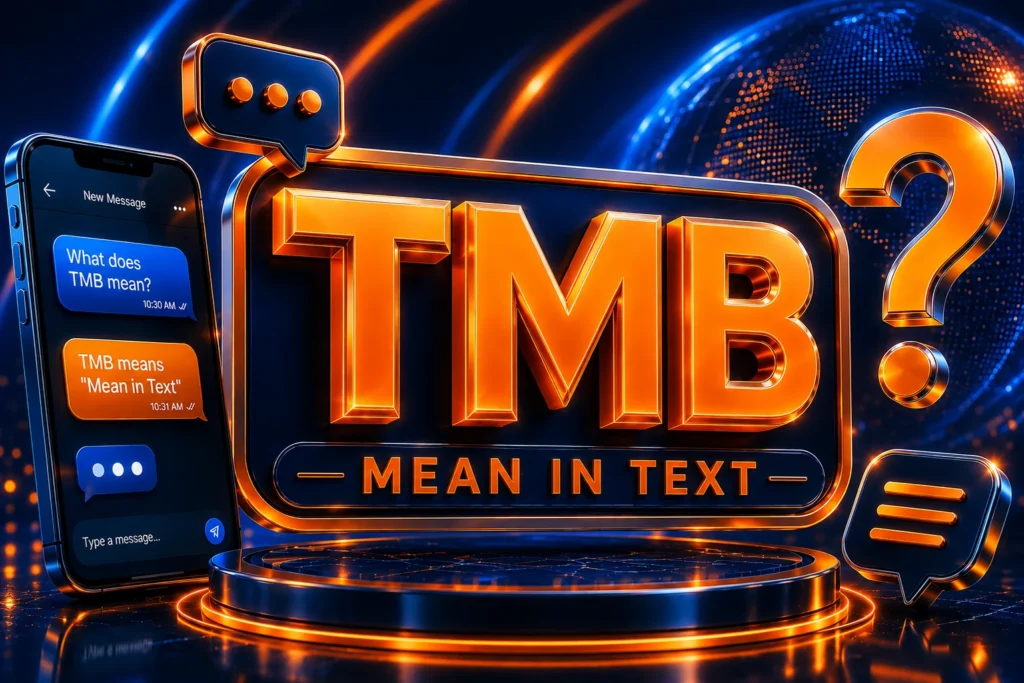
The TMB mean in text can depend on the conversation and the person using it. In many casual texting situations, TMB means “Text Me Back.” It is usually a simple way to ask someone to reply after they receive a message.
For example, someone might text, “Hey, I need to tell you something. TMB when you’re free.” Here, the sender is simply asking the other person to respond.
Understanding the context is important because internet abbreviations can sometimes have more than one interpretation. This guide explains TMB mean in text, its common uses, examples, variations, and the best ways to respond.
TMB Mean in Text – Quick Meaning
The most common TMB meaning in text is “Text Me Back.”
It is used when someone wants another person to reply to a message. The expression is especially common in casual texting, social media conversations, and private messages.
TMB = Text Me Back
You may see it used like this:
“Call me when you get home. TMB.”
“Are you still coming tonight? TMB.”
“I have something important to tell you. TMB when you see this.”
In each example, the sender wants a response.
Is TMB a Casual Expression?
Yes. TMB is generally informal and conversational. It works well between friends, classmates, relatives, partners, and people who already communicate casually.
It is less suitable for formal professional communication because writing “Please text me back” or “Please reply when convenient” sounds clearer and more professional.
Origin and Background of TMB
TMB developed from the broader culture of internet slang and text-message abbreviations. As mobile messaging became faster and more common, people began shortening everyday phrases to save time and typing effort.
Expressions such as BRB, LOL, BTW, TTYL, and TMB became part of casual online communication.
The popularity of smartphones, social networking platforms, and instant messaging made these abbreviations even more familiar.
TMB and Social Media
Today, TMB can appear on platforms such as Instagram, Snapchat, TikTok, Facebook, WhatsApp, and ordinary SMS messages.
Its meaning usually stays the same when the surrounding conversation clearly involves waiting for a response.
The tone can change depending on punctuation and context. For example, “TMB 😊” feels friendly, while “TMB!!!” may sound more urgent.
How the Meaning Has Evolved
Modern internet language is flexible. Some abbreviations have several meanings, while others develop platform-specific interpretations.
That is why it is better to examine the entire conversation instead of assuming that every three-letter abbreviation has only one meaning.
TMB in Real-Life Conversations
WhatsApp Conversation
Person A: Are you coming to dinner tonight?
Person B: I think so. Let me check with my family.
Person A: Okay, TMB when you know.
Here, TMB means “Text Me Back.”
Instagram DM
Person A: I found the shoes you were looking for.
Person B: Seriously? Where?
Person A: I’ll send you the link. TMB after you check it.
The sender is asking for a response after the other person sees the information.
TikTok Comment or DM
Person A: I have another video idea for you 😂
Person B: Send it!
Person A: I will. TMB when you see it.
The abbreviation keeps the conversation short and informal.
Text Message
Person A: I left my charger at your house.
Person B: Oh, I saw it.
Person A: Please keep it for me. TMB when you’re home.
Again, the phrase means “Text Me Back.”
Emotional and Psychological Meaning of TMB
At first glance, TMB may look purely practical. The emotion behind it depends heavily on the situation.
When friends use it, the abbreviation can communicate familiarity. They already understand each other’s texting style, so there is no need for a long sentence.
In a romantic conversation, TMB can sometimes carry more emotional weight. Someone waiting for an important response may use it because they genuinely want reassurance or attention.
The same abbreviation can also sound impatient if the sender has already been waiting for a long time.
What TMB Reveals About Modern Communication
Digital communication encourages people to express thoughts quickly. Abbreviations reduce typing while preserving the basic message.
A short expression such as TMB can also reflect the relationship between two people. Close friends may use abbreviations naturally, while unfamiliar people may prefer complete sentences.
I have often found that the surrounding words matter more than the abbreviation itself. “TMB 😂” and “TMB.” technically contain the same letters, but they can create very different impressions.
Usage in Different Contexts
TMB on Social Media
On social media, TMB is usually informal. It can appear in DMs, captions, comments, or conversations between followers.
Its meaning is generally easy to understand when the person is asking someone to reply privately.
TMB Between Friends
Friends commonly use short forms because their communication already has an established rhythm.
“Busy rn, TMB later” is a natural example of casual texting language.
TMB in Relationships
Partners may use TMB when they want their significant other to respond.
The tone can be affectionate, neutral, or slightly impatient depending on the conversation.
TMB at Work
Using TMB in professional communication is usually not the best choice.
A clearer alternative would be:
“Please reply when you have a moment.”
“Please get back to me when convenient.”
“I’d appreciate your response when you have time.”
These expressions reduce the possibility of confusion.
Casual vs. Serious Tone
TMB is naturally casual. If the subject is serious, sensitive, or professional, writing the complete phrase is usually better.
When NOT to Use TMB
Formal Communication
Avoid TMB in formal emails, official documents, academic writing, or important business messages.
The abbreviation can make an otherwise professional message appear overly casual.
Sensitive Situations
If you are discussing a serious personal issue, abbreviations may make your message feel rushed.
Writing a complete sentence can communicate more care and seriousness.
When the Meaning Is Unclear
If your audience may not understand TMB, avoid using it without context.
Not everyone is familiar with every internet abbreviation.
Cultural and Generational Differences
People from different age groups and online communities can interpret abbreviations differently.
A younger social-media user may immediately understand TMB, while another person may need the full phrase.
Common Misunderstandings About TMB
Mistaking TMB for Another Abbreviation
Because TMB consists of only three letters, people sometimes assume it has a completely different meaning.
Context is the best way to identify the intended interpretation.
Thinking It Is Always Rude
TMB is not automatically rude.
A friendly conversation can make it sound completely normal. Tone becomes more demanding when the message is written with aggressive punctuation or repeated requests.
Taking It Too Literally
Internet abbreviations are designed for quick communication.
The person writing TMB usually is not trying to sound formal or demanding. They may simply be using the shortest familiar expression.
TMB Compared With Similar Texting Expressions
| Expression | Meaning | Typical Tone |
|---|---|---|
| TMB | Text Me Back | Casual |
| TB | Text Back | Casual |
| HMU | Hit Me Up | Friendly/casual |
| LMK | Let Me Know | Casual/neutral |
| DM me | Send me a direct message | Casual |
| Reply ASAP | Reply as soon as possible | Urgent |
| Get back to me | Respond later | Neutral/professional |
Key Insight
The closest expression to TMB is “text me back.” The main difference is that the abbreviation feels faster and more casual, while the full phrase works in a wider range of situations.
Variations and Types of TMB Usage
1. TMB Later
Means “Text me back later.”
Used when the sender does not need an immediate response.
2. TMB ASAP
Means “Text me back as soon as possible.”
It adds urgency to the request.
3. TMB When Free
Means “Text me back when you are free.”
This sounds more relaxed and considerate.
4. TMB When You See This
The sender wants a response after the recipient notices the message.
5. TMB Please
Adding “please” makes the request sound more polite.
6. TMB 😂
The laughing emoji can make the request feel playful or friendly.
7. TMB!!
Multiple exclamation marks can communicate excitement or urgency.
8. TMB Tonight
This specifies when the sender would like a response.
9. TMB Later
This usually indicates that the sender expects a reply at a later time.
10. TMB When You Can
This is one of the softer versions because it does not demand an immediate response.
How to Respond When Someone Uses TMB
Your response depends on your relationship with the person and the situation.
Casual Replies
You can simply say:
“Sure, I will.”
“Yep, texting you now.”
“Okay, got you.”
“Will do.”
Funny Replies
If you are joking with a friend, you could respond:
“Message received 😂”
“I’m alive, relax 😂”
“Okay okay, I’m replying!”
Mature Replies
For a more thoughtful response:
“Sure, I’ll reply when I have a moment.”
“I saw your message. I’ll get back to you shortly.”
“I’ll respond properly when I’m free.”
Respectful Replies
If the conversation is more formal:
“Sure, I’ll get back to you soon.”
“Thanks for letting me know. I’ll respond shortly.”
“I’ll reply as soon as I can.”
Regional and Cultural Usage
Western Culture
In the United States, Canada, the United Kingdom, and other English-speaking communities, abbreviations such as TMB are common in informal digital communication.
The expression generally sounds casual and direct.
Asian Culture
English texting abbreviations are widely used across many Asian online communities.
People who regularly communicate in English may use TMB naturally, especially on social media and messaging apps.
Middle Eastern Culture
English internet slang is also common among many younger users in Middle Eastern digital spaces.
The intended meaning generally depends on the English-speaking context of the conversation.
Global Internet Usage
Social media has made texting abbreviations increasingly international.
A person can encounter TMB in conversations between people from completely different countries.
Gen Z vs. Millennials
Younger users often combine abbreviations, emojis, memes, and shortened phrases.
Millennials may recognize many of the same abbreviations but can have different preferences depending on their communication style.
Neither usage is automatically right or wrong. Digital language changes naturally between generations.
Is TMB Safe for Kids?
Yes, TMB itself is generally a harmless texting abbreviation meaning “Text Me Back.”
The important point is context. Parents and guardians should pay attention to the overall conversation rather than treating individual abbreviations as automatically suspicious.
Online slang can change quickly, so understanding the surrounding messages is more useful than focusing on one abbreviation alone.
Read More: TS Mean in Text: Meaning, Slang, Examples & Uses
FAQs About TMB Mean in Text
What does TMB mean in text?
TMB usually means “Text Me Back” in text messages and online conversations. It is an informal request asking someone to respond.
What does TMB mean on Snapchat?
On Snapchat, TMB commonly means “Text Me Back.” The exact tone depends on the surrounding conversation.
Is TMB rude?
No, TMB is not inherently rude. It is a casual abbreviation, although repeated or forceful use can make the request sound impatient.
What does TMB mean from a girl?
If a girl sends TMB, it generally means “Text Me Back.” The personal meaning depends on your relationship and the context of the conversation.
What does TMB mean from a guy?
If a guy uses TMB, it usually means “Text Me Back.” It does not automatically indicate romantic interest.
Is TMB formal English?
No. TMB is informal texting slang. Use the complete phrase in professional or formal communication.
What should I reply to TMB?
You can respond with “Sure, I will,” “Will do,” or simply answer the person’s question. The best response depends on why they asked you to text back.
Conclusion
Understanding TMB mean in text is simple once you recognize its most common use: “Text Me Back.” It is a short, casual way to ask someone to respond to a message.
You will most often see TMB in texts, social media DMs, group chats, and conversations between friends.
The most important thing is context. A simple “TMB 😊” can sound friendly, while “TMB!!!” may suggest urgency. The abbreviation itself does not determine the emotion.
If you understand the relationship, situation, and surrounding words, you can interpret TMB confidently and respond naturally.