WTV Mean in Text: What Does WTV Mean?

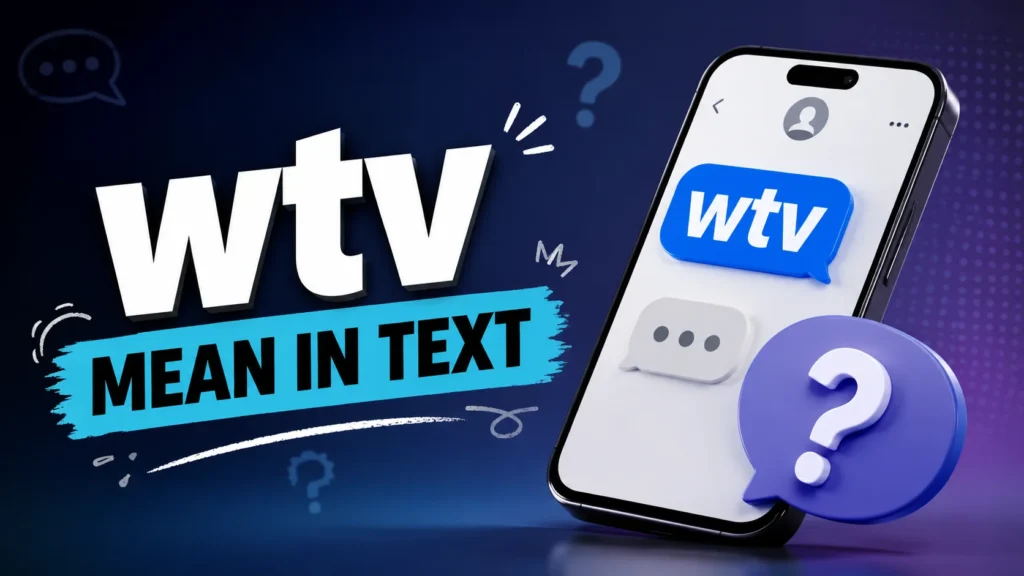
If someone sends you “WTV” in a text, you may wonder whether they are being casual, dismissive, annoyed, or simply short on time. The meaning can change slightly depending on the conversation and the relationship between the people involved.
So, what does WTV mean in text? In most texting and social media conversations, WTV means “whatever.” It is a shortened form commonly used to express indifference, acceptance, annoyance, or a willingness to let something go.
Understanding the tone behind WTV is important because “whatever” can sound friendly in one conversation and dismissive in another.
WTV Mean in Text – Quick Meaning
WTV usually means “whatever” in text messages, chats, and social media.
People use it when they want to show that they:
- Do not strongly care about a choice
- Are willing to accept something
- Feel slightly annoyed
- Want to end a disagreement
- Do not want to continue explaining themselves
- Are being casual or playful
For example:
“WTV, you choose the restaurant.”
Here, WTV means the person does not mind which restaurant you select.
Another example:
“WTV, I’m done arguing.”
In this situation, WTV can sound more dismissive or frustrated.
A playful example might be:
“WTV 😂 I still think my outfit looks better.”
The surrounding words and emojis help determine the intended tone.
Origin & Background
WTV developed as part of the broader culture of internet shorthand and text messaging. As people began communicating through SMS, chat rooms, instant messaging, and social media, shorter forms became increasingly common.
“Whatever” was naturally shortened to WTV because the three letters preserve the beginning sounds and recognizable structure of the word.
The abbreviation became especially useful in fast conversations where typing a full word felt unnecessary.
Social platforms such as Instagram, Snapchat, TikTok, Discord, and messaging apps helped informal abbreviations become part of everyday digital communication.
Today, WTV is generally understood by people familiar with online slang, although its popularity can vary by age group and online community.
Real-Life Conversations
WhatsApp Conversation
Person A:
“Pizza or burgers tonight?”
Person B:
“WTV, I’m good with either.”
Here, WTV shows flexibility. Person B genuinely does not have a strong preference.
Instagram DM
Person A:
“Are you still mad about yesterday?”
Person B:
“WTV. I don’t wanna talk about it.”
This version feels more emotionally distant. WTV helps communicate that the person does not want to continue the discussion.
TikTok Comments
Person A:
“Your favorite song is definitely overrated.”
Person B:
“WTV 😂 I still love it.”
Here, WTV is playful rather than hostile. The laughing emoji makes the comment feel less serious.
Text Message
Person A:
“Should I wear the black shoes or white ones?”
Person B:
“WTV looks good tbh.”
The abbreviation means “whatever” in a relaxed way, suggesting that either option is fine.
Emotional & Psychological Meaning
WTV is interesting because its literal meaning is simple, but its emotional meaning can vary considerably.
Sometimes it communicates indifference. The speaker genuinely does not care about the outcome.
At other times, it can signal frustration. Someone may use WTV because they feel that continuing an argument is pointless.
It can also communicate emotional withdrawal. Instead of explaining their feelings, a person may simply say “WTV” because they do not want to engage further.
In casual conversations, however, there may be no negative emotion at all.
For example, imagine a friend asking you whether you want coffee or tea. Saying “WTV, you decide” may simply mean you are happy with either choice.
This is why context matters more than the abbreviation itself.
Usage in Different Contexts
Social Media
WTV frequently appears in comments, captions, replies, and direct messages.
It can make a sentence feel shorter and more conversational.
“WTV, I’m posting it anyway.”
The phrase works especially well in informal online conversations.
Friends and Relationships
Among close friends, WTV can be completely harmless.
“WTV, you pick the movie.”
Between romantic partners, however, the same abbreviation can sometimes sound cold if the conversation is already emotional.
“WTV. Do what you want.”
In that situation, the phrase may suggest frustration rather than indifference.
Work and Professional Settings
WTV is generally not appropriate for formal workplace communication.
Instead of writing:
“WTV works for me.”
A professional alternative would be:
“Either option works for me.”
Clear language is safer when communicating with clients, managers, teachers, or unfamiliar colleagues.
Casual vs. Serious Tone
WTV works best in relaxed conversations.
When a discussion involves serious emotions, conflict, or important decisions, writing the full word “whatever” may still be ambiguous. A clearer sentence can prevent unnecessary misunderstanding.
When NOT to Use WTV
Avoid WTV when communicating in formal or sensitive situations.
You should generally avoid it in:
- Job applications
- Business emails
- Academic assignments
- Formal complaints
- Professional presentations
- Serious emotional conversations
- Messages to someone unfamiliar with texting slang
Cultural sensitivity also matters. Some people interpret “whatever” as rude or dismissive, particularly during disagreements.
If you are unsure how the other person will interpret WTV, using clearer language is usually the better choice.
Common Misunderstandings
WTV Always Means “I Don’t Care”
Not necessarily.
Someone may use WTV simply because both choices are acceptable.
“WTV, you choose.”
This does not automatically mean the person is annoyed.
WTV Is Always Rude
Again, context determines the tone.
Compare:
“WTV 😂”
with:
“WTV. Leave me alone.”
The second message clearly carries more emotional distance.
WTV Has Only One Tone
WTV can communicate acceptance, boredom, frustration, sarcasm, humor, or indifference.
The surrounding words, punctuation, emojis, and previous messages all influence interpretation.
WTV and Whatever Are Completely Different
They usually communicate the same basic idea. The major difference is that WTV is an informal abbreviation suited to quick digital communication.
WTV vs. Similar Expressions
| Expression | Meaning | Typical Tone |
|---|---|---|
| WTV | Whatever | Casual, indifferent |
| Whatever | I don’t care / any option is fine | Casual to dismissive |
| IDC | I don’t care | Direct, sometimes blunt |
| IDK | I don’t know | Uncertain or casual |
| NVM | Never mind | Dismissive or corrective |
| TBH | To be honest | Direct, conversational |
| IKR | I know, right? | Agreement |
| Fine | Accepting something | Depends heavily on context |
| It’s up to you | You decide | Usually neutral |
Key Insight
WTV is closest to “whatever,” but its emotional tone depends heavily on context. A friendly emoji can make it playful, while a short response during an argument can make it sound dismissive.
Variations and Related Forms
1. WTV
Meaning: Whatever.
This is the basic abbreviation used in texting and online conversations.
2. Wtv
Meaning: Whatever.
Lowercase Wtv often appears in casual messages where capitalization is not important.
3. Whatever
Meaning: The full version of WTV.
Using the complete word can sometimes make the message feel more deliberate.
4. WTV LOL
Meaning: Whatever, in a humorous or unserious way.
Adding “LOL” can soften the statement.
5. WTV 😂
Meaning: Whatever, but playfully.
The laughing emoji can make the expression feel less confrontational.
6. WTV IDC
Meaning: Whatever, I don’t care.
This combination sounds more strongly indifferent and can appear blunt.
7. WTV You Choose
Meaning: I have no preference; you decide.
This is commonly used when choosing food, movies, activities, or plans.
8. WTV Works
Meaning: Any option is acceptable.
It usually expresses flexibility rather than anger.
9. WTV Bro
Meaning: Whatever, bro.
This can be friendly, sarcastic, or dismissive depending on the relationship.
10. WTV Then
Meaning: Fine, whatever then.
This version can carry frustration, especially after a disagreement.
How to Respond When Someone Uses WTV
Your response should depend on the situation.
Casual Replies
- “Okay, you choose 😂”
- “Haha, fair enough.”
- “Cool, let’s do that.”
- “Works for me too.”
Funny Replies
- “That was a very passionate ‘whatever’ 😂”
- “Wow, such enthusiasm.”
- “I’ll take that as a yes then 😂”
Mature Replies
- “No worries. Let me know if you change your mind.”
- “That’s fine. I just wanted to check.”
- “Okay, we can leave it there.”
Respectful Replies
If WTV seems dismissive, avoid immediately becoming defensive.
You could say:
“No problem. I just wanted to understand what you preferred.”
This keeps the conversation calm and gives the other person room to clarify.
Regional & Cultural Usage
Western Culture
In American and British online communication, WTV is generally recognized as an informal version of “whatever.”
Its meaning can range from relaxed indifference to mild annoyance.
Asian Culture
English internet slang is widely used across many Asian online communities, particularly among younger users.
However, the emotional interpretation may depend on local communication habits and the relationship between speakers.
Middle Eastern Culture
English abbreviations are commonly mixed with local languages in digital conversations, particularly among younger internet users.
WTV may appear in English-heavy chats, but the intended tone still depends on the speaker’s relationship with the recipient.
Global Internet Usage
Because social media crosses national boundaries, abbreviations such as WTV can travel quickly between communities.
A person may understand WTV even if English is not their first language.
Generational Differences
Gen Z users are generally more comfortable with rapidly changing internet shorthand.
Millennials may recognize WTV but may use the full word “whatever” more frequently.
Older users may be less familiar with the abbreviation, so writing the complete word can sometimes be clearer.
Is WTV Safe for Kids?
WTV itself is generally a harmless abbreviation meaning “whatever.”
The important issue is context.
Children and teenagers may use it casually with friends, but they should understand that short expressions can sometimes sound disrespectful.
For example, saying “WTV” to a close friend may be harmless, while using it toward a teacher or parent during an argument could appear dismissive.
Teaching children to recognize tone and audience is more useful than simply memorizing slang words.
FAQs
What does WTV mean in text?
WTV usually means “whatever” in text messages, social media posts, and online chats. It can express indifference, acceptance, humor, or mild annoyance.
Is WTV rude?
WTV is not automatically rude. Its tone depends on context, punctuation, emojis, and the relationship between the people communicating.
What does WTV mean on Snapchat?
On Snapchat, WTV generally means “whatever.” Friends may use it to express that they do not care about a particular choice or topic.
What does WTV mean on TikTok?
On TikTok, WTV usually means “whatever.” It can appear in comments, captions, or replies and may be used seriously, sarcastically, or humorously.
Is WTV the same as whatever?
Yes. WTV is an informal abbreviation for “whatever.” The abbreviation is mainly used in casual digital communication.
Can I use WTV at work?
It is better to avoid WTV in formal workplace communication. Phrases such as “either option works for me” sound clearer and more professional.
What should I reply when someone says WTV?
You can respond according to the tone. Casual replies include “You choose,” “Fair enough,” or “Works for me.” If the person sounds annoyed, a calm response is usually best.
Conclusion
WTV mean in text is usually simple: WTV means “whatever.” Yet the short abbreviation can carry several different emotions depending on the situation.
It may show that someone genuinely does not have a preference. In another conversation, it may communicate frustration, sarcasm, or a desire to end an argument.
The best way to understand WTV is to look beyond the three letters. Consider the conversation, the person’s relationship with you, their punctuation, and any emojis they use.
When used with close friends, WTV can make texting quick and natural. In professional or emotionally sensitive situations, clearer wording is usually the smarter choice.
Understanding that difference helps you use internet slang confidently without accidentally sending the wrong message.