
TFW Meaning in Text: What It Really Means

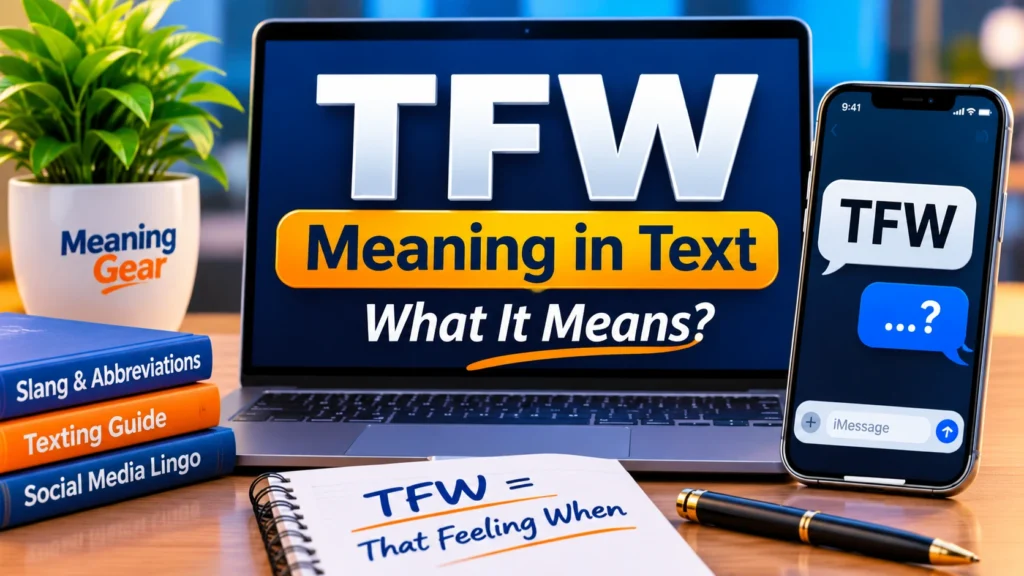
TFW meaning in text is usually “That Feeling When.” People use this internet slang abbreviation to describe an emotion, reaction, or relatable experience. When someone texts you “TFW,” they are introducing a feeling or situation that others may recognize, often in a funny, awkward, happy, or frustrating way.
For example, “TFW you finally finish your exams” expresses the feeling of relief after completing exams.
What Does TFW Mean in Text?
TFW stands for “That Feeling When.” It is an abbreviation commonly used in informal digital communication, including text messages, social media posts, and online conversations.
People use TFW when they want to describe a particular moment or emotion without writing a long explanation. It often introduces a relatable experience.
For example:
- TFW you get unexpected good news.
- TFW your favorite song starts playing.
- TFW you realize tomorrow is a holiday.
In everyday texting, TFW helps people express feelings in a short and recognizable way.
Is TFW an Acronym or Slang?
TFW is an abbreviation formed from the first letters of “That Feeling When.” It is also considered internet slang because of its informal use in online conversations.
It is not a formal English word or a traditional acronym.
TFW Meaning on Different Platforms
TFW generally keeps the same meaning across platforms, although people use it in slightly different ways.
| Platform | How TFW Is Used |
|---|---|
| SMS and iMessage | Sharing relatable feelings with friends |
| Describing funny or emotional situations | |
| Expressing reactions in direct messages | |
| Snapchat | Sharing everyday experiences with friends |
| Discord | Reacting to relatable gaming or community situations |
| TikTok | Introducing relatable feelings in comments and captions |
| X (Twitter) | Sharing humorous or relatable experiences |
The lowercase version, tfw, is common in casual typing. The uppercase version, TFW, makes the abbreviation more noticeable but does not change its meaning.
Different Tones of TFW in Text Messages
TFW can communicate different emotions depending on the situation.
1. Funny TFW
People use TFW to describe amusing or embarrassing moments.
Example:
A: TFW you wave at someone who isn’t waving at you.
B: That happened to me yesterday!
A: I wanted to disappear.
B: At least you gave them a free laugh.
2. Sarcastic TFW
It can also introduce an annoying or disappointing situation sarcastically.
Example:
A: TFW your internet stops working during an important meeting.
B: Technology always chooses the worst moment.
A: Seriously, what a perfect day!
B: Couldn’t be better!
3. Playful TFW
Friends may use it to share happy or exciting moments.
Example:
A: TFW your favorite person finally replies.
B: Someone sounds excited!
A: Maybe just a little.
B: I knew it!
4. Serious TFW
TFW can introduce genuine emotions, including relief, sadness, or nervousness.
Example:
A: TFW you finally hear that your family is safe.
B: That must feel like a huge relief.
A: It really does.
B: I’m glad everything is okay.
12 Realistic TFW Text Conversation Examples
Here are realistic examples showing how people use TFW in everyday conversations.
1. Between Friends
A: TFW school gets canceled unexpectedly.
B: Best news I’ve heard all week!
2. Between Partners
A: TFW you finally get to see your favorite person.
B: I wish you were here right now.
3. Between Siblings
A: TFW mom says dinner is ready.
B: Finally! I’m starving.
4. With a Coworker
A: TFW you finish a project before the deadline.
B: Definitely time for a coffee break.
5. With a Parent
A: TFW your child remembers to clean their room.
B: That’s a rare moment!
6. In a Group Chat
A: TFW everyone agrees on a movie.
B: We actually made a decision!
7. Between Classmates
A: TFW the teacher announces there’s no homework.
B: Today just got better.
8. With a Close Friend
A: TFW you find money in an old jacket.
B: Unexpected happiness!
9. Between Gaming Friends
A: TFW you win a match with one second left.
B: That was way too close!
10. With a Stranger Online
A: TFW someone holds the door when your hands are full.
B: Small acts of kindness matter.
11. Between Friends
A: TFW your favorite food arrives.
B: Don’t talk to me until I’ve eaten.
12. Between Partners
A: TFW you receive a sweet message for no reason.
B: Just wanted to make you smile.
Grammar and Language Role of TFW
TFW does not function like a regular English noun or verb. It is an informal abbreviation used to introduce a feeling or situation.
- Part of speech: Internet slang abbreviation.
- Full form: That Feeling When.
- Sentence position: Usually appears at the beginning of a phrase.
- Capitalization: Both TFW and tfw are acceptable.
- Standalone use: It can appear alone as a reaction, especially when the situation is understood from context.
- Register: Informal and conversational.
For example, someone might text, “TFW you wake up and realize it’s Saturday.”
In formal writing, it is better to write the complete expression or describe the feeling directly.
How to Reply to TFW in Text?
Your response depends on the situation and the emotion behind the message.
Funny Reply
- “That’s painfully relatable!”
- “Why is this so accurate?”
- “I’ve been there!”
Serious Reply
- “I completely understand that feeling.”
- “That must have been difficult.”
- “I’m glad things worked out.”
Flirty Reply
- “TFW you get a message from me?”
- “Maybe I can make your day better.”
Neutral Reply
- “I know what you mean.”
- “Absolutely!”
- “That makes sense.”
TFW vs Similar Texting Abbreviations
Some abbreviations are confused with TFW because they also express reactions, feelings, or relatable situations.
| Term | Meaning | Usage Context | Tone | Popularity | Confusion Risk |
|---|---|---|---|---|---|
| TFW | That Feeling When | Relatable experiences | Emotional/Funny | Common online | Low |
| MFW | My Face When | Facial reactions | Humorous | Common online | Medium |
| IMO | In My Opinion | Sharing opinions | Neutral | Common | Low |
| NGL | Not Gonna Lie | Honest reactions | Casual | Common | Low |
| IYKYK | If You Know, You Know | Shared experiences | Playful | Common | Medium |
| IDGAF | I Don’t Give a F*** | Expressing indifference | Strong | Common | Medium |
Who Uses TFW?
TFW is generally associated with informal internet communication rather than a particular age group.
Gen Z vs Millennials
- Gen Z: May use TFW in casual chats, online communities, and social media conversations to express relatable moments.
- Millennials: May use it when sharing familiar experiences, humor, or reactions in digital conversations.
Both groups can understand and use the abbreviation, although individual preferences differ.
Regional Usage
TFW is understandable in English-language online communication across different regions, including the United States, United Kingdom, and other English-speaking communities. However, its exact frequency varies between users and online communities.
Origin of TFW and Internet Culture
TFW developed as internet shorthand for “That Feeling When.” It became recognizable through online discussions and image-based humor, where users introduced a relatable situation with the abbreviation.
It is particularly associated with reaction images and relatable internet posts. Unlike some newer expressions, TFW is not exclusively connected to TikTok.
Its usefulness comes from how easily it introduces a shared experience. Instead of explaining a complicated emotion, someone can write TFW and let the situation communicate the feeling.
Is TFW Rude or Inappropriate?
No. TFW is generally not considered rude, offensive, or profane.
However, its appropriateness depends on the conversation.
- With friends: Perfectly acceptable in casual messages.
- With family: Fine for informal conversations.
- At school: Usually acceptable in casual student communication.
- At work: Better avoided in formal emails or professional messages.
- With strangers: Use it when the conversation is relaxed and informal.
TFW itself does not contain offensive language or carry an inherently negative meaning.
Real-World Observation: Why TFW Is Useful in Texting
One interesting feature of TFW is that it often introduces a situation rather than explaining an emotion directly. For example, “TFW you open the fridge for the fifth time” allows the reader to recognize the familiar experience without needing a detailed explanation. This makes the abbreviation especially useful in short messages, where the situation itself delivers the humor or emotion. Its meaning remains recognizable even when the feeling changes from excitement to frustration.
Read More: Emoji Meaning in Text: What Emojis Really Mean
Frequently Asked Questions About TFW
1. What does TFW stand for in texting?
TFW stands for “That Feeling When.” It is an informal abbreviation used to introduce a particular emotion or relatable situation. People commonly use it in text messages and online conversations. For example, “TFW you get good news” describes the happiness of receiving unexpected positive news.
2. What does TFW mean when someone texts it to you?
When someone sends you TFW, they are usually describing a feeling or situation they want you to recognize. It may be funny, exciting, awkward, or frustrating. You should look at the rest of their message to understand the intended emotion. It does not automatically indicate romantic interest or sadness.
3. Is TFW rude to use in a text?
No, TFW is not inherently rude or offensive. It is a casual internet abbreviation used to express relatable experiences. You can comfortably use it with friends and people you know well. However, it may sound too informal in professional communication.
4. What does TFW mean on WhatsApp?
On WhatsApp, TFW usually means “That Feeling When.” People use it in private chats and group conversations to describe familiar situations. For example, “TFW everyone cancels their plans” communicates disappointment or frustration. Its meaning is generally the same as in other messaging apps.
5. What’s the difference between texting TFW and saying it out loud?
TFW is primarily an internet and texting abbreviation. In spoken conversation, people are more likely to say “that feeling when” rather than pronounce the individual letters. The written abbreviation is especially useful for short messages and online humor. Its meaning does not change between written and spoken explanations.
6. Does TFW mean the same thing in a group chat and a private message?
Yes, its basic meaning remains “That Feeling When” in both situations. In a private message, someone might share a personal experience with you. In a group chat, the same abbreviation can introduce a situation that several people find relatable. The surrounding conversation determines its exact tone.
7. Can I use TFW in professional messages?
It is generally better to avoid TFW in formal emails, business reports, and messages to clients. The abbreviation belongs to informal digital communication. In professional writing, use complete sentences to explain the situation or emotion. This keeps your message clear and appropriate.
8. Is TFW still used in texting?
Yes, TFW remains a recognizable internet abbreviation. People use it to introduce relatable situations and reactions in digital communication. However, its popularity can vary across platforms and communities. Understanding its full form helps you recognize it when it appears in a message.
Final Thoughts on TFW Meaning in Text
Understanding TFW meaning in text makes it easier to recognize this popular internet abbreviation in everyday digital conversations. It stands for “That Feeling When” and introduces relatable emotions or experiences.
Quick usage tips:
- Use TFW when describing a relatable situation.
- Place it at the beginning of a phrase.
- Keep it for informal messages and online conversations.
- Check the context to understand the intended emotion.
Common mistakes to avoid:
- Do not confuse TFW with MFW.
- Do not assume it always expresses happiness.
- Do not use it as a formal business abbreviation.
- Do not interpret it as a romantic message without context.
Use TFW when chatting casually with friends or sharing a familiar experience. Avoid it when writing formal or professional messages.

[…] Read More: TFW Meaning in Text: What It Really Means […]