TTM Meaning in Text – What Does TTM Stand For?

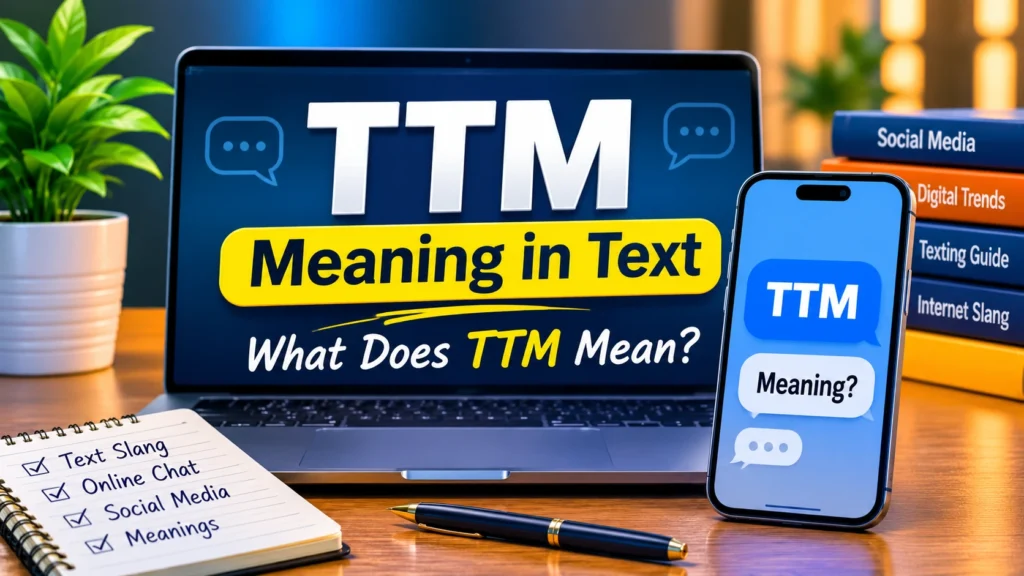
TTM meaning in text usually stands for “Talk To Me.” It is a casual texting abbreviation people use when they want someone to start a conversation, share something, or open up about what’s happening. When someone sends you “TTM,” they are generally inviting you to talk rather than asking you to do something specific.
What Does TTM Mean in Text Messages?
TTM is an abbreviation for Talk To Me. It is commonly used in informal digital conversations, especially when someone wants attention, a response, or a more open conversation.
For example:
- Friend: “You seem quiet today.”
- You: “I’ve just had a long day.”
- Friend: “TTM, what’s going on?”
- You: “I’ll tell you everything.”
In this conversation, TTM means the friend is encouraging you to share what’s bothering you.
TTM is not a traditional acronym with a complicated definition. It is a shortened form of a three-word phrase, making it quicker to type in everyday messages.
Other Possible Meanings of TTM
Although Talk To Me is a common interpretation in casual texting, TTM can have other meanings depending on the conversation.
- Through The Mail: Sometimes used when discussing sending or receiving something by postal mail.
- Time To Market: A business and marketing abbreviation describing how long it takes to bring a product to market.
- Trailing Twelve Months: A financial term referring to the most recent twelve-month reporting period.
These alternatives are context-dependent. If someone sends TTM during a personal conversation, Talk To Me is generally the most natural interpretation.
TTM Meaning in Text Slang
TTM is best described as an initialism or texting abbreviation, not a traditional slang word. Each letter represents the first letter of a word:
- T = Talk
- T = To
- M = Me
People use it to communicate a request without typing the complete phrase. Its meaning can change slightly depending on the situation.
For example:
- “TTM, I’m listening.” – The sender wants you to share something.
- “I’m bored, ttm!” – The sender wants someone to chat with.
- “TTM about your interview.” – The sender wants to hear about your experience.
Can TTM Mean Text To Me?
In some conversations, TTM may be interpreted as Text To Me, particularly when the discussion is specifically about sending messages rather than talking. However, this is a less established interpretation than Talk To Me.
If someone says, “TTM when you get home,” the surrounding conversation helps determine whether they mean a conversation or a text message.
Where Is TTM Used in Texting?
TTM is suitable for informal digital conversations. Its basic meaning generally remains the same across messaging platforms.
1. TTM in SMS and iMessage
In regular phone messages, TTM is a quick way to ask someone to communicate.
Example:
“I’m worried about you. TTM when you’re free.”
The sender wants to hear from you and may be offering support.
2. TTM on WhatsApp
On WhatsApp, friends, relatives, and partners can use TTM in private chats and group conversations.
Example:
“Everyone has gone quiet. TTM 😂”
Here, the sender is trying to get the conversation moving again.
3. TTM on Snapchat
On Snapchat, TTM can appear in private snaps and chat messages. It may be used to invite a response or encourage someone to share a story.
Example:
“You said something happened yesterday. TTM 👀”
4. TTM on Instagram
Instagram users may use TTM in direct messages when they want to start a conversation or hear more about something.
Example:
“Just saw your new post. TTM about the trip!”
The sender is asking the other person to explain the experience.
5. TTM in Discord and Group Chats
In Discord conversations, TTM can be used in informal private messages or group chats when someone wants another person to respond.
Example:
“TTM when you join the voice chat.”
It does not have a special gaming definition by itself.
Different Tones of TTM in Conversations
Although TTM has one primary meaning, its tone depends on the relationship and surrounding words.
1. Funny TTM
Friends may use TTM humorously when they are bored or want some entertainment.
Example conversation:
A: “I’m sitting here doing absolutely nothing.”
B: “Same, this day is too boring.”
A: “TTM, entertain me.”
B: “Only if you have some good gossip 😂”
2. Sarcastic TTM
TTM can sound sarcastic when someone is frustrated because another person has stopped responding.
Example conversation:
A: “You disappeared again?”
B: “I’ve been busy.”
A: “Oh, really? TTM when you remember I exist.”
B: “Okay, okay. I’m here!”
3. Playful TTM
Between close friends or romantic partners, TTM can be a playful invitation to spend time chatting.
Example conversation:
A: “Guess what happened today?”
B: “What? Tell me!”
A: “You have to ask properly first.”
B: “Fine, TTM! I’m curious now.”
4. Serious TTM
When someone is concerned, TTM can communicate that they are ready to listen.
Example conversation:
A: “I don’t really feel like talking to anyone.”
B: “That’s okay. You don’t have to explain everything.”
A: “I just have a lot on my mind.”
B: “I’m here for you. TTM whenever you’re ready.”
10 Realistic TTM Text Conversation Examples
Here are additional examples showing how people can use TTM naturally in different relationships.
Example 1: Between friends
A: “Hey, are you free?”
B: “Yeah, what’s up?”
A: “TTM, I need your opinion.”
B: “Sure, tell me.”
Example 2: Between partners
A: “You’ve barely spoken today.”
B: “Sorry, it’s been a busy day.”
A: “I miss our conversations. TTM tonight?”
B: “Of course, I’ll call you.”
Example 3: Between siblings
A: “Did Mom tell you about Sunday?”
B: “No, what happened?”
A: “TTM when you get home.”
B: “Okay, I’ll message you.”
Example 4: Between coworkers
A: “Have you checked the updated schedule?”
B: “Not yet.”
A: “TTM when you’ve reviewed it.”
B: “Sure, I’ll get back to you.”
Example 5: Between a parent and child
A: “How was your first day?”
B: “It was okay.”
A: “TTM, I’d love to hear more.”
B: “I’ll tell you after dinner.”
Example 6: Between old friends
A: “It’s been months since we caught up.”
B: “I know, time flies!”
A: “TTM this weekend?”
B: “Definitely. Let’s catch up.”
Example 7: In a group chat
A: “Nobody has replied to my question.”
B: “I just saw it.”
A: “TTM, guys. I need some suggestions.”
B: “I’ll send you a few ideas.”
Example 8: Between classmates
A: “Did you understand today’s lecture?”
B: “Most of it, why?”
A: “TTM about the last question.”
B: “Sure, I’ll explain it.”
Example 9: A supportive conversation
A: “I’ve had a difficult week.”
B: “I’m sorry to hear that.”
A: “I don’t know who to talk to.”
B: “You can TTM anytime. I’m listening.”
Example 10: Someone you recently met
A: “It was nice meeting you yesterday.”
B: “You too!”
A: “TTM sometime. I’d like to hear more about your work.”
B: “Sure, that sounds good.”
How to Reply When Someone Sends TTM
Your response depends on whether you want to have a conversation, joke around, or keep things simple.
Funny Reply
If a friend sends TTM because they are bored, you can respond with humor.
- “Only if you have snacks to offer 😂”
- “Okay, but you’re starting the conversation!”
- “What’s the latest gossip?”
Serious Reply
If someone uses TTM because they are worried about you, respond honestly.
- “Thanks for checking on me. I appreciate it.”
- “I’ve been dealing with a few things lately.”
- “Sure, I could use someone to talk to.”
Flirty Reply
If TTM comes from someone you like, a playful response may work.
- “I was waiting for you to ask 😉”
- “Only because it’s you.”
- “I always have time to talk to you.”
Neutral or Unbothered Reply
If you want to keep things straightforward, try:
- “Sure, what’s up?”
- “I’ll message you later.”
- “I’m a little busy right now.”
- “What’s going on?”
TTM and Similar Texting Abbreviations
TTM is sometimes confused with other short expressions because several texting abbreviations involve communication, contact, or conversation.
| Term | Meaning | Usage Context | Tone | Popularity | Confusion Risk |
|---|---|---|---|---|---|
| TTM | Talk To Me | Inviting conversation | Friendly/direct | Common | Low |
| HMU | Hit Me Up | Asking someone to contact you | Casual | Common | Medium |
| TTYL | Talk To You Later | Ending a conversation | Friendly | Common | Medium |
| LMK | Let Me Know | Requesting information | Neutral | Common | Medium |
| WYD | What You Doing? | Asking about someone’s activity | Casual | Common | Medium |
| DTTM | Don’t Talk To Me | Asking someone not to communicate | Direct | Less common | High |
Important difference: TTM invites someone to talk, whereas DTTM communicates the opposite intention. TTYL is also different because it usually signals that a conversation is ending rather than beginning.
Who Uses TTM in Text Messages?
TTM is an informal abbreviation that can be understood across different age groups. However, there is no reliable public demographic data establishing exactly which generation uses it most frequently.
Gen Z
Younger digital communicators may use TTM in quick messages, private chats, and informal social conversations. Lowercase typing, such as “ttm,” can fit naturally into casual messaging.
Millennials
Millennials may also use TTM when catching up with friends, communicating with partners, or encouraging someone to share information. The abbreviation is not exclusive to younger users.
Regional Usage: US, UK, and Global
TTM is understandable in English-language digital communication, but its exact popularity by country is not established.
- United States: The phrase Talk To Me is easily understood in informal English conversations.
- United Kingdom: The same expansion can be understood in casual messaging.
- Global usage: English-speaking users in different countries may recognize TTM through online conversations.
It is better to focus on the message context rather than assume that the abbreviation has a different meaning in a particular country.
Origin and Internet Culture of TTM
TTM comes from the ordinary English phrase Talk To Me. It follows the initialism pattern used in digital shorthand, where the first letters of a phrase represent the complete expression.
Unlike slang terms created around a particular viral video or internet meme, TTM does not have a clearly verified single creator, launch date, or documented platform of origin.
Its appeal is straightforward: three letters communicate an invitation that would otherwise require a longer sentence.
The phrase is also slightly different from abbreviations such as BRB or TTYL. Those generally communicate timing or a change in availability, while TTM directly invites another person to participate in a conversation.
Is TTM Rude or Inappropriate?
Generally, TTM is not rude, offensive, or profane. It is a normal informal expression, but the way someone uses it can affect how the message feels.
Is TTM Appropriate at School?
Yes, students can use TTM in casual conversations with friends and classmates. However, writing the complete phrase is usually better when communicating with teachers or school administrators.
Can You Use TTM at Work?
TTM may be acceptable in a casual conversation with a coworker you know well. For professional emails, formal messages, or communication with managers, use clearer alternatives such as:
- “Please contact me when available.”
- “Could we discuss this?”
- “Let me know when you have time to talk.”
Is TTM Offensive?
No. TTM does not contain profanity or an insulting expression. However, repeatedly sending it to someone who does not want to communicate can feel pushy or disrespectful.
A Real-World Observation About TTM
One interesting feature of TTM is that it does not specify what the sender wants to discuss. Unlike WYD, which asks what someone is doing, TTM leaves the subject open. That small difference makes it useful in several situations: a friend can use it to ask about your day, a partner can use it to reconnect, and someone concerned about you can use it to encourage an honest conversation. The three letters do not explain the whole situation; they simply open the door for the other person to speak.
Read More: YWS Meaning in Text: What Does YWS Stand For?
Frequently Asked Questions About TTM Meaning in Text
1. What does TTM mean in text from a girl?
When a girl sends TTM, she usually means “Talk To Me.” She may want to start a conversation, hear about your day, or ask you to share something. It does not automatically mean she is romantically interested in you. The relationship and surrounding messages help explain her intention.
2. What does TTM mean in text from a guy?
When a guy texts TTM, it generally means “Talk To Me.” He might want your attention, have something to discuss, or simply want to chat. It can be friendly, supportive, or playful depending on the conversation. The abbreviation alone does not prove romantic interest.
3. Is it rude to reply with just TTM in a text?
No, replying with TTM is not automatically rude. However, sending it without any explanation can sound direct or demanding in certain situations. Adding a friendly phrase can make the message more welcoming. For example, “TTM whenever you’re free” sounds less forceful.
4. What’s the difference between texting TTM and saying it out loud?
TTM is a written abbreviation for “Talk To Me.” When speaking face-to-face or on a phone call, people normally say the complete phrase rather than pronounce the three letters. The meaning remains the same, but the written version is more informal and convenient for messaging.
5. Does TTM mean the same thing in a group chat and a private text?
Yes, the primary meaning remains “Talk To Me” in both situations. In a private conversation, it usually invites one person to respond or open up. In a group chat, it can encourage several people to join a discussion. The intended audience depends on who receives the message.
6. Does TTM mean Text To Me?
It can be interpreted as “Text To Me” in certain conversations, but this is less established than “Talk To Me.” If the discussion is about messaging rather than speaking, that interpretation may make sense. Otherwise, Talk To Me is the more natural reading.
7. Can TTM be flirty?
Yes, TTM can appear in flirtatious conversations between people who are interested in each other. For example, someone might send “TTM, I miss talking to you.” However, the abbreviation itself is not inherently romantic. The surrounding words and relationship determine whether it sounds flirty.
8. What is the difference between TTM and TTYL?
TTM means “Talk To Me,” while TTYL means “Talk To You Later.” TTM invites someone to communicate, whereas TTYL is commonly used when ending a conversation temporarily. Although both contain the word “talk,” they serve different purposes in texting.
Conclusion: What Does TTM Mean in Text?
The most common TTM meaning in text is Talk To Me. It is an informal abbreviation used to invite someone to chat, share information, or open up about something. Whether it appears in an SMS, WhatsApp message, Snapchat chat, or Instagram DM, the basic meaning generally stays the same.
Usage tips:
- Use TTM when inviting friends to have a conversation.
- Add context when you want to discuss something specific.
- Use lowercase or uppercase depending on your typing style.
- Consider the relationship before using it in serious conversations.
Common mistakes to avoid:
- Don’t automatically assume TTM is romantic.
- Don’t confuse TTM with TTYL.
- Don’t assume every use means Text To Me.
- Avoid using TTM in formal business communication.
Use TTM when you want someone to talk, but choose the complete phrase when clarity and professionalism matter.

[…] Read More: TTM Meaning in Text – What Does TTM Stand For? […]